
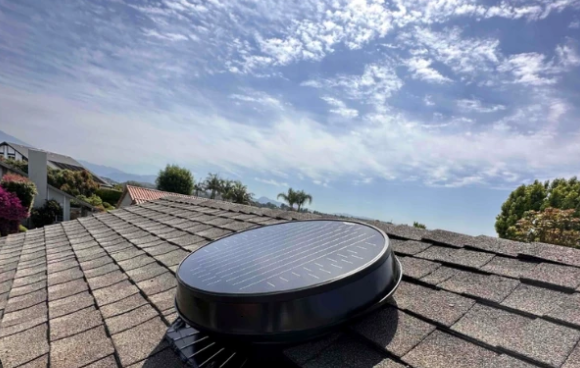
Solar Attic Fan Installation: Cool Your Attic Without a Bigger Power Bill
Roofing Done Right the First Time.
We check your roof's sun exposure, pitch, and existing ventilation before we tell you if a solar attic fan is the right call.
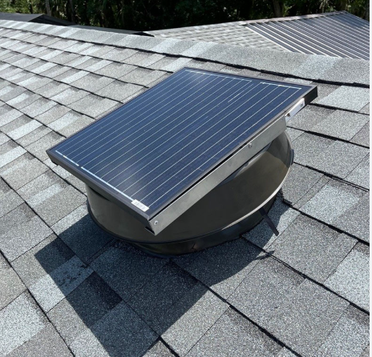
Signs Your Attic Is Overheating
An overheated attic shows up as hot upstairs rooms, climbing summer power bills, and shingles that age faster than they should. A solar attic fan pulls that trapped heat out before it damages your roof deck or drives up your cooling costs. If you're noticing any of these signs, it's worth having someone take a look at your attic.
You don't need a thermometer to know your attic's cooking. Walk into your upstairs bedroom on a July afternoon. Does it feel noticeably hotter than the rest of the house? That's usually the first clue. We hear this all the time from folks in older neighborhoods where homes were built before attic ventilation codes got stricter. The heat just sits up there with nowhere to go.
- Upstairs rooms stay warm even with the AC running hard
- Summer electric bills creep up without any other change in usage
- Shingles look curled, cracked, or faded ahead of schedule
- You feel a wall of heat when you open the attic hatch
- Musty or stale smells linger in the attic during humid months
Georgia summers push attic temps well past 120 degrees on a sunny day. That kind of heat bakes your shingles from underneath. When we check an attic showing these signs, the insulation is fine and the real issue is stale, trapped air with no way to go.
Solar Attic Fans vs. Electric Models
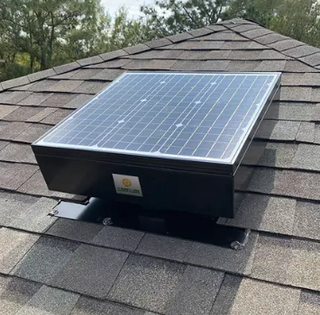
So which one do you need? Solar attic fans run off a small panel mounted right on the unit. No wiring into your electrical panel means no monthly draw on your power bill. Electric attic fans plug into your home's wiring and run whenever the thermostat tells them to, day or night, sun or no sun.
Here's the tradeoff. A solar fan only works while the sun's out. That's exactly when your attic is hottest anyway. An electric fan keeps running after dark too, but it pulls power the whole time it does.
Georgia summers push attic temperatures well past 130 degrees on a lot of older asphalt shingle roofs we inspect, especially homes with darker shingle colors that soak up more heat. That heat load is the whole reason ventilation matters in the first place.
We get asked which one is better constantly. The answer depends on your roof's sun exposure. A roof with a south-facing slope and no shade tree cover is a strong candidate for solar. It'll get plenty of direct sun to keep the fan working hard through the afternoon peak. A heavily shaded roof, or one tucked under mature oaks, might not generate enough solar output to matter.
No electrical work means no electrician on site and no new circuit to run through your attic. That's a real advantage if your attic access is tight or your panel's already maxed out.
We'll look at your roof's pitch, sun exposure, and existing ventilation during the inspection. We will tell you straight which setup makes sense, not just which one we'd rather install.
Keep your solar attic fan performing
Solar attic fans run on energy from the sun to continuously draw heat and moisture out of your attic, without adding a dime to your electricity bill. A dead or inefficient solar fan allows extreme heat to build up beneath your roof deck, baking your shingles, raising your A/C costs, and causing moisture damage. Keep your home cool and energy-efficient with our 30-Point Roof Inspection.
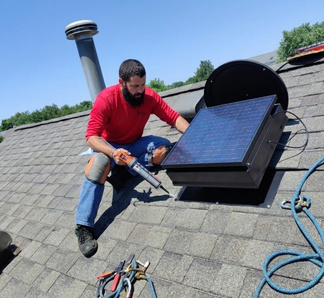
- Detailed Written EstimateClear, upfront pricing on solar fan testing, panel cleaning and maintenance, or full unit replacement.
- Photo Proof & DocumentationHigh-resolution photos showing the condition of your solar panel, motor housing, and surrounding roof flashing.
- In-Person Expert ConsultationOur specialist evaluates your attic's solar airflow performance and recommends the best solar fan solution to maximize cooling and roof lifespan.
Protect your attic. Prevent costly heat and moisture damage.
Book My Free Inspection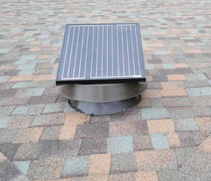
When a Solar Attic Fan Isn't the Right Fix
Not every hot attic needs a fan. We check this before we ever suggest one. Sometimes the answer is no.
If your attic already has good ridge vent and soffit vent balance, adding a fan can mess with the airflow instead of helping it. Air needs a clear path in and a clear path out. A fan fighting against blocked soffits just spins for nothing.
- Your roof deck is soft, rotted, or near the end of its life. Fix that first. A fan on a failing roof is putting new parts on a bad base
- Heavy shade from mature trees blocks most direct sun on the roof plane. Some older lots have thick hardwood canopy that limits how much a solar fan can run
- The moisture problem is coming from a bathroom or kitchen vent dumping into the attic, not from summer heat buildup
- Your attic insulation is thin or missing. Ventilation helps, but it can't replace insulation that isn't there
So how do you know which one applies to you? That's the question, and it's a fair one. Sometimes a homeowner calls thinking they need a fan when what they really need is a soffit repair or better insulation. We see this more than you'd think. A powered attic fan or better passive venting might be the smarter call depending on the setup, and we'll tell you straight if that's the case. A free inspection is where we sort this out, no guessing involved.
How Solar Attic Fan Pricing Is Structured
Solar attic fan pricing isn't one flat number. It moves based on a handful of real factors, not guesswork. Contractors typically price the fan unit, the mounting hardware, and the labor separately, then roll it into one written quote.
The fan's CFM rating matters a lot. A bigger attic needs more airflow, so it needs a stronger fan or sometimes two. Roof pitch changes labor time too. Steeper roofs take longer to work safely. That shows up in the price.
- Fan size and CFM rating matched to your attic's square footage
- Roof type, asphalt shingle versus metal, since flashing methods differ
- Mounting style, curb-mounted units cost more labor than low-profile designs
- Roof pitch and height, which affects access and safety setup
- Whether existing intake ventilation, like soffit vents, needs adjusting to balance airflow
That last point trips people up. A solar attic fan without enough intake air can't pull heat out properly, no matter how good the fan is. So a solid quote should look at your whole ventilation setup, not just drop a fan on the roof and call it done.
Before you hire anyone, ask for a written quote that breaks down the fan, the flashing work, and any ventilation changes separately. Ask how they'll seal the roof penetration. Ask if they checked your soffit vents. We put all of that in writing after every free inspection, so there's nothing vague to sort out later.
Thinking about a solar attic fan?
Let's talk. We'll look at the roof's sun exposure, the pitch, and the ventilation, then tell you what it actually needs.
Book My Free Inspection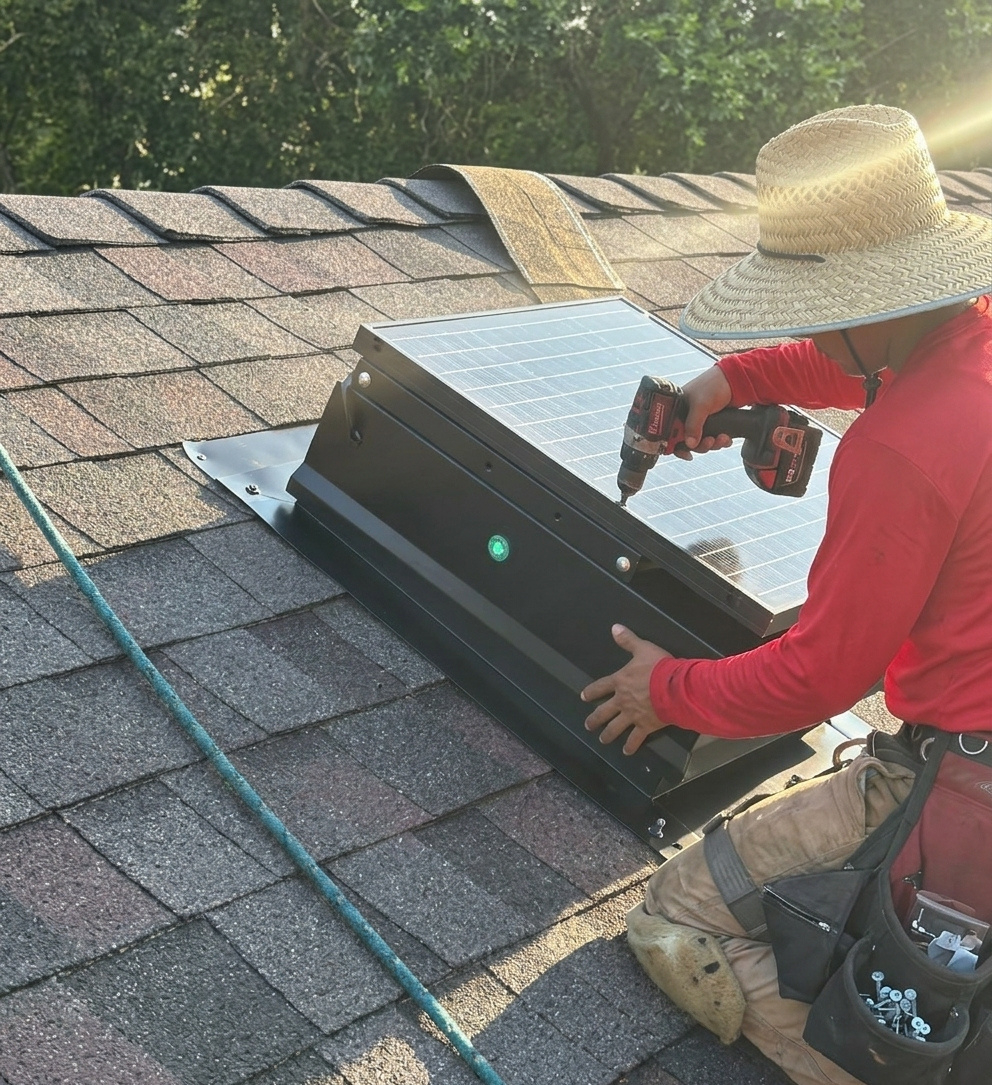
What happens during a solar attic fan installation
Once you've got a written quote and you're ready to move forward, the install itself is a half-day job for most homes. We're not tearing your roof apart. We're cutting one clean opening, setting the fan, and sealing it back up so it sheds water like the rest of your roofline.
- We check the attic first, looking at rafter spacing and existing ventilation before we pick a spot
- We find the south-facing roof plane, usually south or west, so the panel gets full sun
- We cut the opening and set the base flashing under the shingle course above it
- We mount the fan unit and run the low-voltage wiring down into the attic space
- We seal every edge, then run the fan to check the motor and airflow before we clean up
Older homes often have steeper roof pitches than newer builds. That changes how we set the flashing. Steeper pitch means more overlap, more care with the seal. That's the difference between a fan that lasts and one that leaks in year two.
We haul off the cut-out shingle and any debris before we leave. No mess, no open holes overnight, no surprises waiting for you when you get home.
Common questions about solar attic fans
How do I know if my attic needs a solar attic fan?
Will a solar attic fan work if my roof is shaded by trees?
What's the real difference between a solar and an electric attic fan?
How long does a solar attic fan installation take?
Can adding a fan cause problems if my attic already has vents?
Do older homes need extra work before a fan can be installed?

Metro Atlanta's trusted roofing team. Roof replacement, repair, storm damage restoration and inspections across Cobb County, North Fulton, Atlanta and DeKalb, done right the first time.
© 2026 Shelter Guard Roofing. All Rights Reserved.