
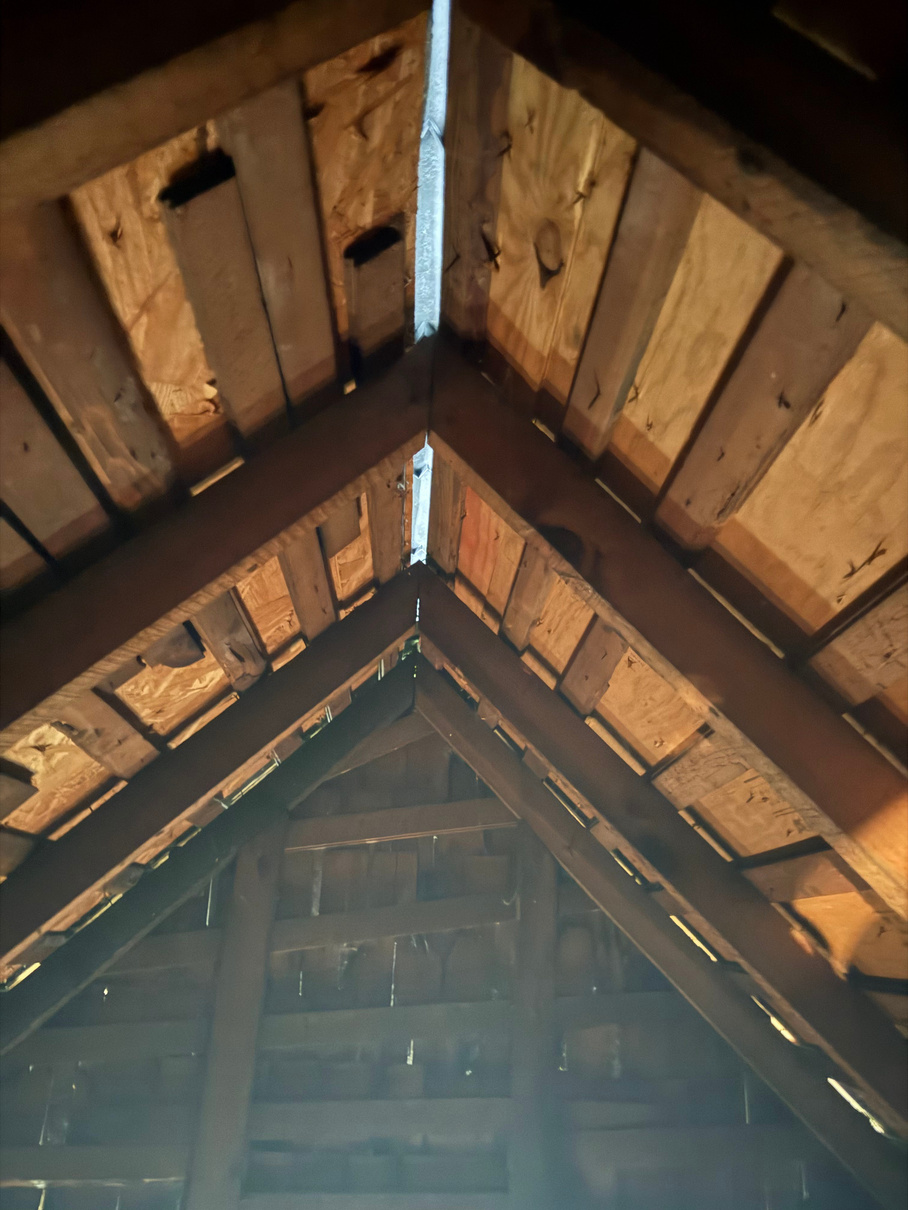
Roof decking repair: catching hidden damage before it spreads
Roofing done right the first time.
Soft spots, sagging rooflines, and ceiling stains usually mean the wood under your shingles has started to rot. Catching it early keeps a patch from becoming a section.
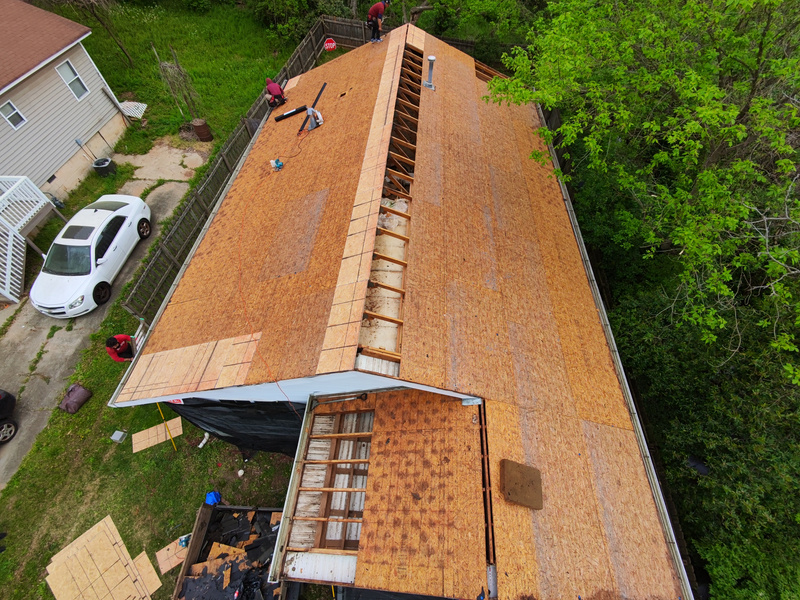
Spotting the warning signs of rotted roof decking
Soft spots, sagging rooflines, and stains on your ceiling usually mean the decking underneath has started to rot. Catching it early keeps a small repair from turning into a full deck replacement, so a quick inspection is worth the call.
Most homeowners do not climb on their roof, so decking damage tends to hide until it is bad. The signs show up inside the house first, if you know what to look for.
- Brown or yellow stains spreading across ceiling drywall, usually near a valley or chimney
- A soft, spongy feeling when you walk across a section of roof
- Visible sagging between rafters when you look up at the roof from the driveway
- Daylight coming through the attic sheathing during a sunny afternoon
- A musty smell in the attic that will not go away even after the weather clears
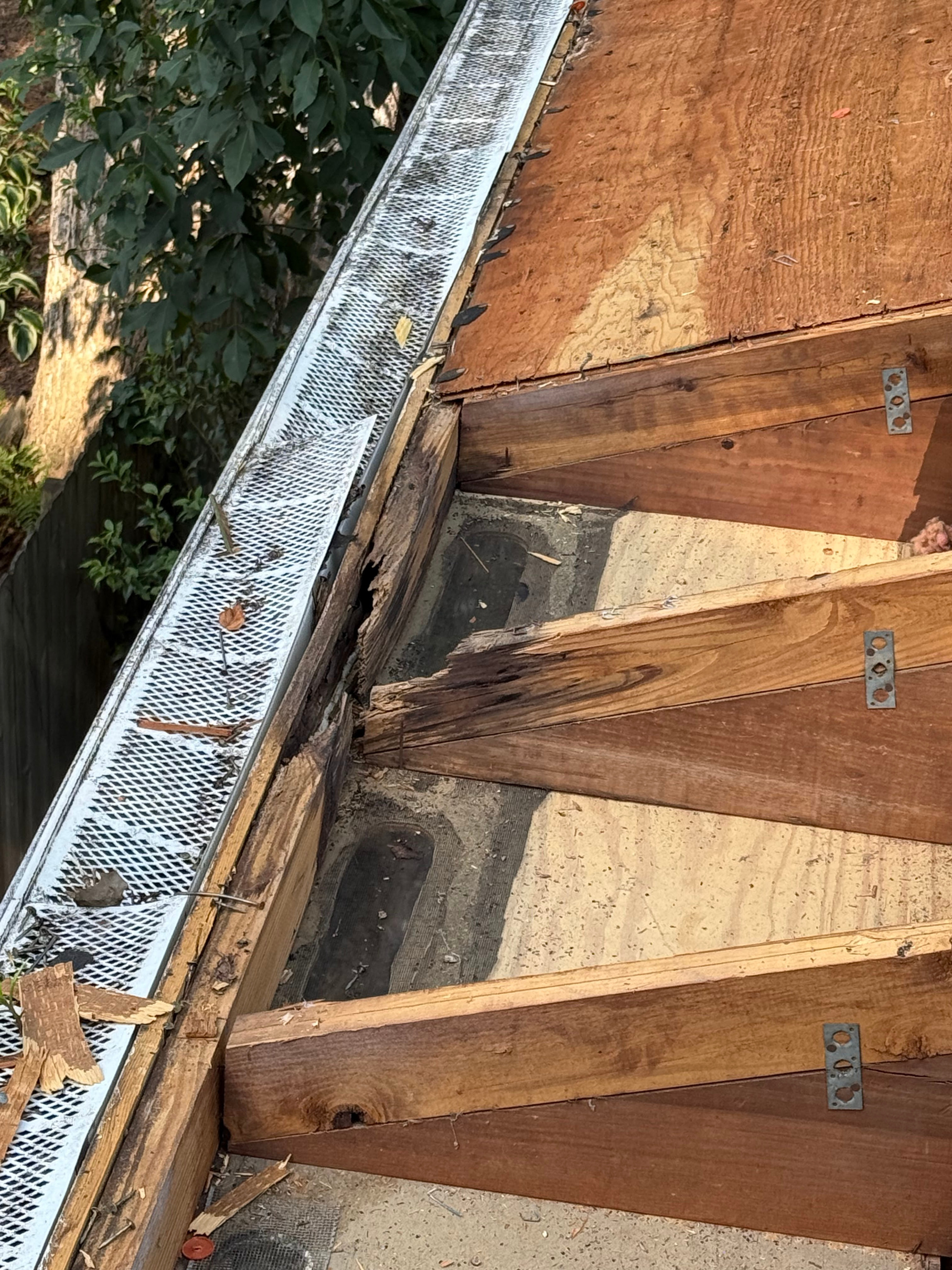
Mature trees and heavy debris can create a specific version of this problem. Pine needles can pack into valleys and around pipe boots, hold moisture against the decking, and allow rot to set in where you cannot see it. We have pulled up shingles on homes that looked fine from the street and found decking soft enough to push a finger through.
Not every stain means rot. Sometimes it is just condensation from poor attic ventilation, nothing structural at all. You will not know which one you are dealing with by looking at a ceiling stain from your living room.
If you are seeing any of these signs, do not wait for it to spread. A free inspection tells you what is going on, in plain language, before you spend a dime.
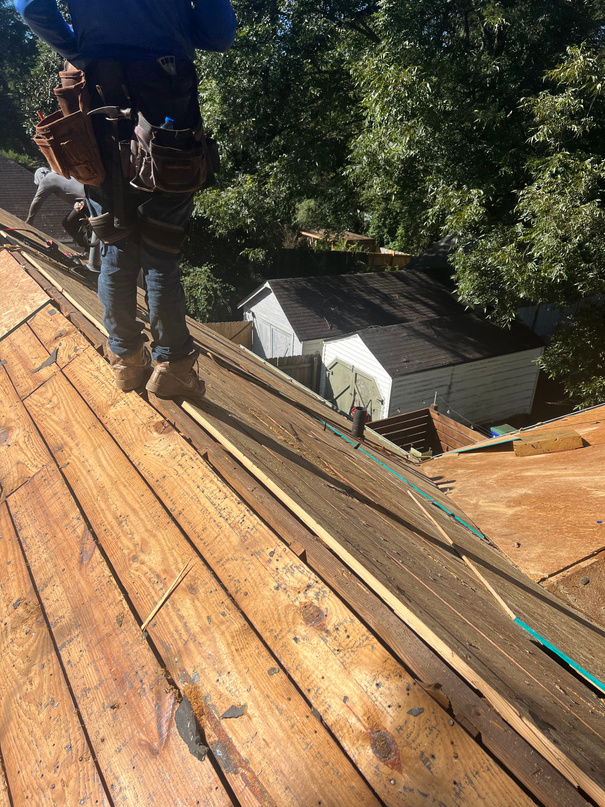
Repair or replace: how much decking damage is too much
Not every soft spot means the whole roof is in trouble. A single pipe boot leak that has been dripping for a few months might only soften a two-foot patch of decking around the vent. That is a quick fix: cut out the bad wood, sister in new plywood, move on.
So how do you know when it is bigger than that? We check three things: how far the soft wood spreads from the leak point, whether the rafters underneath still feel solid, and how long the water has likely been getting in.
- Soft spot smaller than a dinner plate, isolated to one leak source: usually a spot repair
- Soft wood tracking along a rafter line or spreading past three feet: often needs a wider section replaced
- Rafters feel spongy or you can push a screwdriver into them: that is a structural conversation, not just decking
- Multiple soft areas across the roof plane: points to a longer term leak, not a one-time event
Humid summers can make this worse than folks expect. Wet decking that does not fully dry between storms breaks down faster, so a leak that started small in June can be a much bigger repair by September.
If the soft spot is under six square feet, it is a repair. Past that, we are usually talking about a section of the roof, not just a patch. We will walk the attic with a flashlight and tell you what we see, plain and simple, before any work starts.
Protect your roof's foundation
Roof decking forms the structural foundation beneath your shingles or metal panels. Water leaks, poor ventilation, or heavy weather can cause plywood decking to rot, warp, or sag, weakening your roof's entire structure and putting your interior at serious risk. Ensure your roof's foundation is rock-solid with our 30-Point Roof Inspection.
- Detailed written estimateClear, upfront pricing detailing deck board replacement or structural framing repairs.
- Photo proof & documentationHigh-resolution photos showing soft spots, water stain tracks, wood rot, or compromised decking areas.
- In-person expert consultationOur specialist walks you through the condition of your roof decking and recommends the best, most secure repair solution.
Protect your roof's foundation. Prevent costly structural damage.
Book My Free Inspection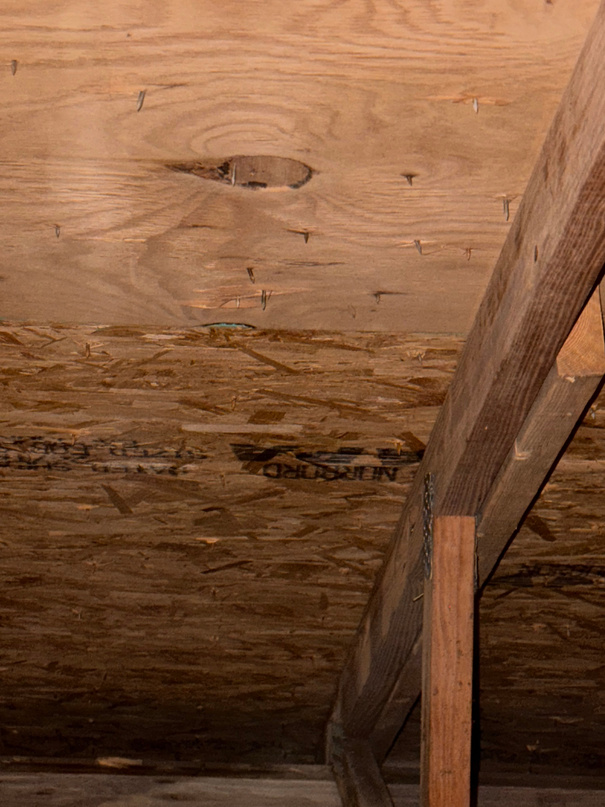
When your roof doesn't need decking repair
Not every roof problem means the decking is shot. A lot of what looks scary from the attic is normal wear that does not touch the wood underneath.
A small brown stain on the ceiling often turns out to be a pipe boot or flashing issue, not a decking problem. Water finds the path of least resistance. It can travel along a rafter for feet before it ever drips down, so the stain you see is not always right above the source. If the wood in your attic still feels firm and there is no sag when you walk the roof, chances are you are looking at a flashing repair or a pipe boot replacement, not decking work.
Here is a quick gut check before you assume the worst.
- A single dark spot on the ceiling with dry, solid wood nearby
- A missing or lifted shingle with no soft spots when pressed
- Minor granule loss in the gutters after a storm
- A musty attic smell with no visible rot or give in the boards
None of those, on their own, mean the decking has failed.
So how do you know for sure? Sometimes you do not, not until someone gets up there and presses on the wood. That is the whole point of getting eyes on it before anyone talks repair scope.
If a roofer tells you decking work is needed without ever setting foot in the attic or walking the roof deck, that is worth questioning.
Thinking about roof decking repair?
Let's talk. We walk the attic first, press on the wood, and tell you whether it's a patch, a section, or not decking at all.
Book My Free InspectionOr call (404) 620-5560
What happens during a roof decking repair
Once we are on the roof, the process is straightforward. We are not guessing here. We are following what the damage tells us.
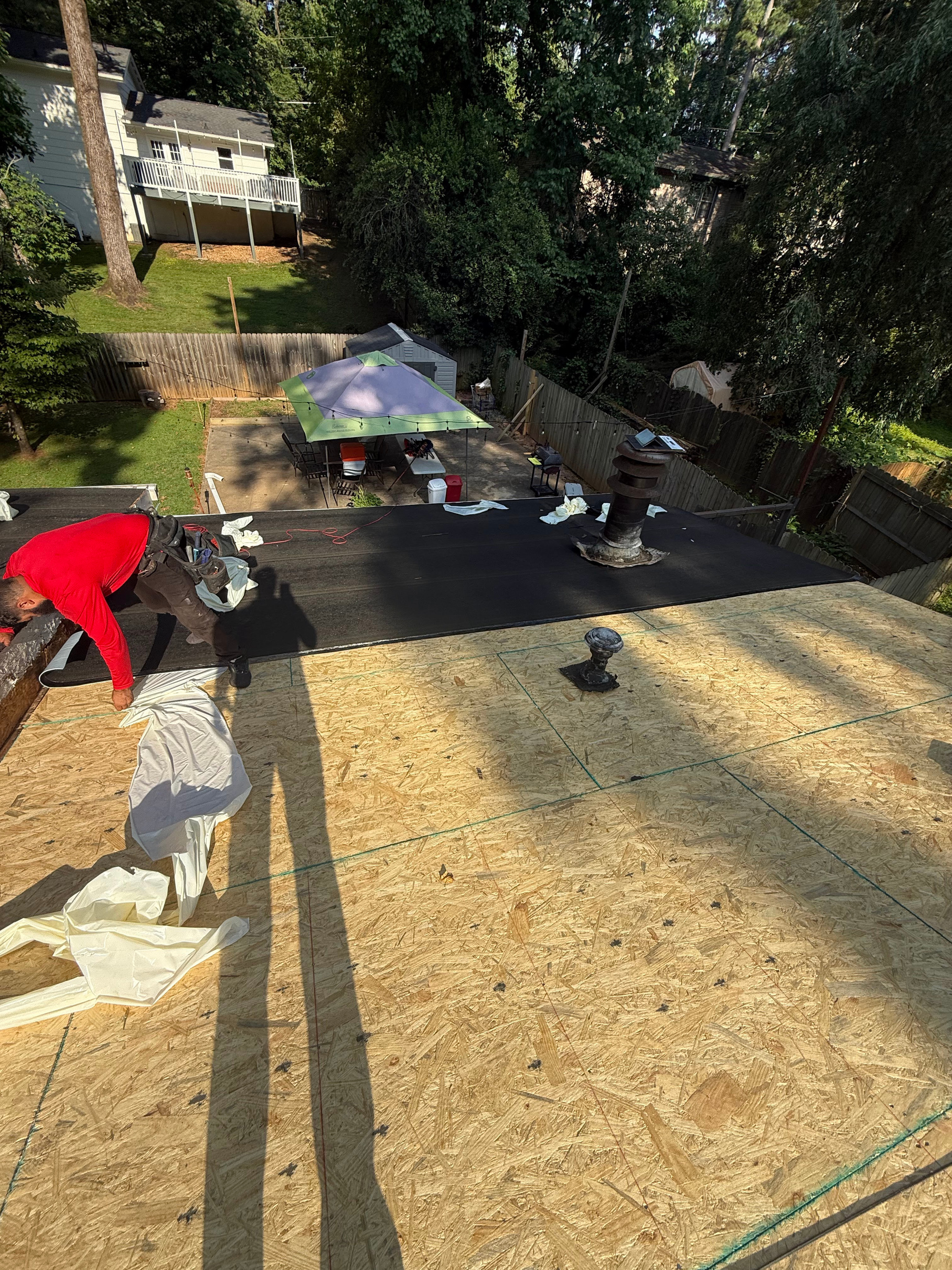
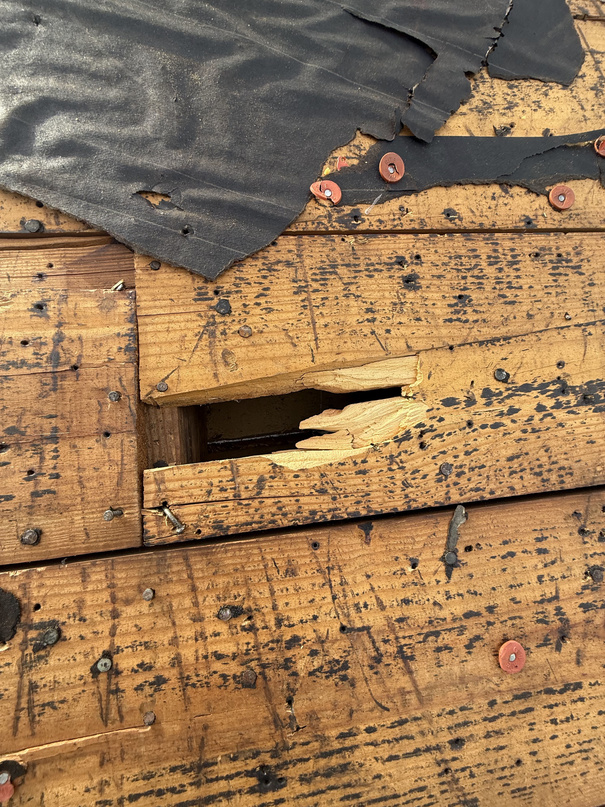
- We pull the shingles and underlayment back from the damaged section, just enough to expose the decking underneath.
- We check every board by hand, pressing and walking sections to find soft spots that do not show from the surface.
- Any rotted or delaminated plywood or OSB gets cut out along the roof rafters, not just around the stain.
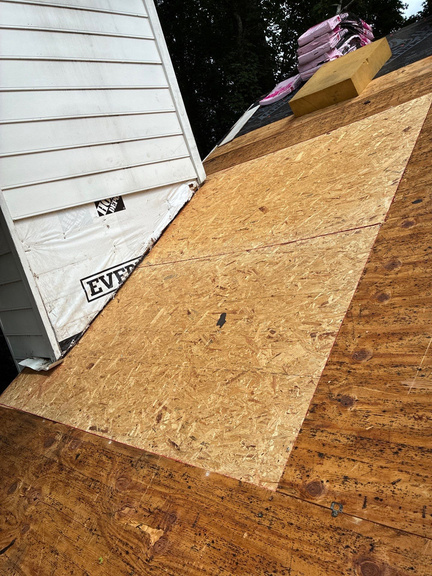
- New decking goes in matched to the existing thickness, then nailed to code spacing so it ties into the rest of the roof deck.
- We photograph the old and new decking before covering it back up. That is part of our documentation, and it matters for insurance claims.
- Underlayment and shingles go back down over the repaired section, tied into the surrounding roofline so there is no visible patch line.
On older homes, we sometimes find the original decking is thinner than what is used today. When that happens, we match it to keep the roof line even, not just swap in whatever is on the truck.
Most decking repairs take a few hours to a full day, depending on how much rot we find once the shingles come off. We have cut into a section that looked fine from the attic, only to find the rot had already spread two feet further under the shingles. That is why we do not estimate decking repair without opening it up first.
Decking repair pricing is not one flat number. Most contractors price by the square foot of plywood or OSB replaced, plus tear-off and disposal, so a small section near a chimney costs less than decking damaged across a whole slope. What moves the number: how much wood is soft rather than just stained, whether damage is isolated or spread across roof planes, access and pitch, the decking material needed to match, and whether flashing, fascia, or soffit repair rides along. We pull back the shingles, check the decking by hand, and write down what we find before we quote anything. Every quote comes in writing with the damage documented in photos. No surprise line items once the job is underway.
Common questions about roof decking repair
How do I know if my roof needs decking repair?
What happens when you come out to look at my roof?
How long does a roof decking repair take?
Why does decking damage get worse in humid climates?
Do I need the whole roof deck replaced, or just a section?

Metro Atlanta's trusted roofing team. Roof replacement, repair, storm damage restoration and inspections across Cobb County, North Fulton, Atlanta and DeKalb, done right the first time.
© 2026 Shelter Guard Roofing. All Rights Reserved.