
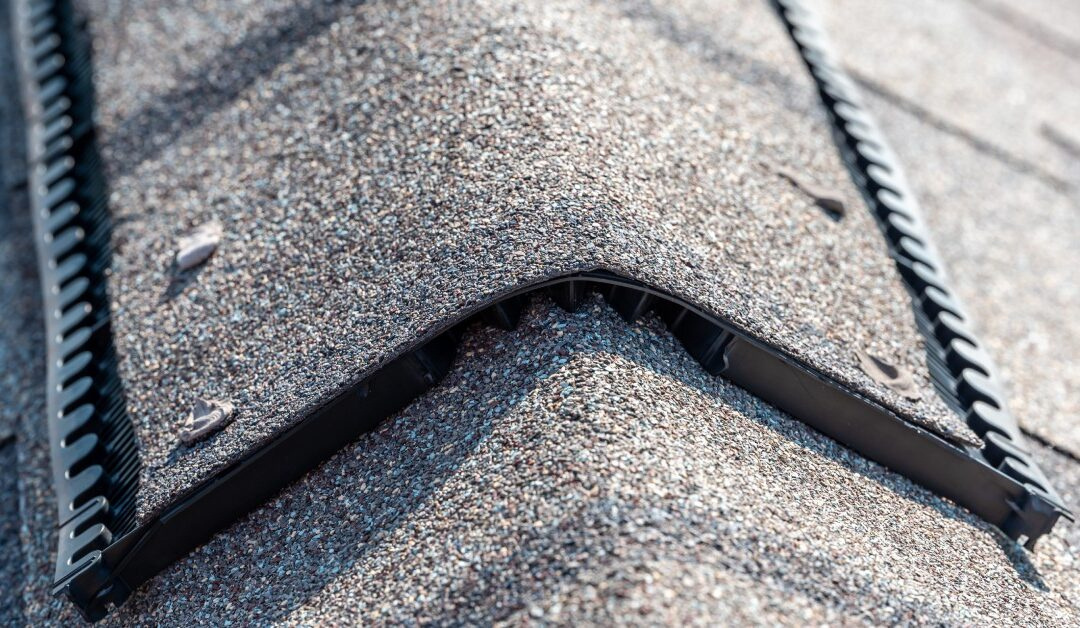
Ridge Vent Installation: Stop Attic Heat Before It Starts
Roofing Done Right the First Time.
We check the ridge line, the soffits, and the attic before we tell you what your roof actually needs, not after we've written a quote.
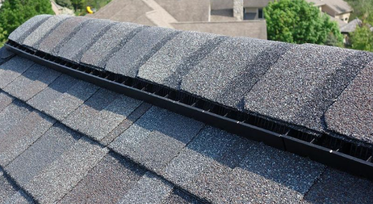
Reading the Signs of Poor Attic Airflow
Poor attic airflow shows up as heat, moisture, and shingle wear you can notice from inside and outside your home. In summer, attic temps climb fast without a working ridge vent pulling hot air out. Catching the signs early keeps small ventilation problems from turning into deck or shingle damage.
So how do you know your attic is struggling? Start with your hand. Go up there on a July afternoon and if it feels like an oven, that's not normal. It should be warm, not brutal. We check attic temperatures on almost every inspection. Homes without proper ridge venting run noticeably hotter than the ones that have it.
Look at your shingles from the ground too. Curling, cracking, or granule loss near the roof's peak often points back to trapped heat with nowhere to go. Long stretches of summer heat can wear out a shingle roof faster than it should.
- Musty smell in the attic, especially after a humid stretch
- Frost or condensation on the underside of the roof deck in winter
- Higher than expected cooling bills during peak summer months
- Dark streaking or staining along the ridge line from the outside
- Soffit vents that look blocked, painted over, or stuffed with insulation
When a homeowner calls about a hot upstairs bedroom, we find the same thing. The soffit vents are fine, but nothing's pulling air out at the top. That's the piece a ridge vent handles. Without it, hot air just sits up there with nowhere to escape.
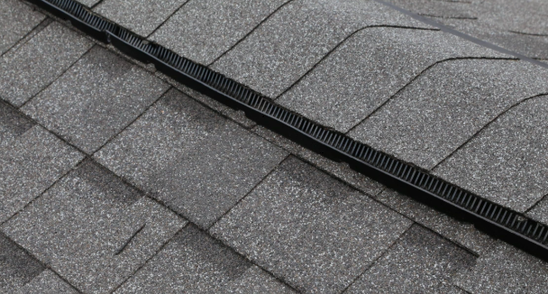
Ridge Vent, Soffit Vent, or Box Vent: Choosing the Right System
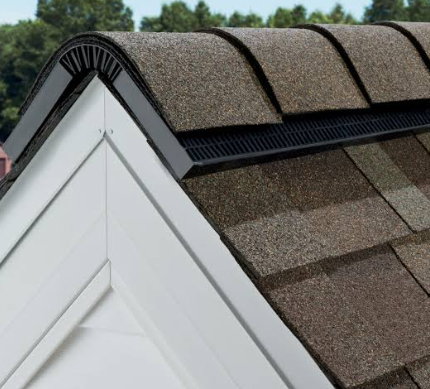
A ridge vent doesn't work alone. It's the exhaust side of a system, and it needs intake low on the roof to pull air through the attic. Skip that part and you've got a vent that looks right but doesn't do much.
Ridge vent
Runs along the peak, pulls hot air out continuously, works on roofs with a long ridge line.
Soffit vent
Sits under the eaves, feeds cool air in. This is the intake half a ridge vent depends on.
Box vent
Individual vents cut into the roof deck, used when the ridge is too short or broken up by dormers.
Hip roofs are where this gets tricky. Short ridge lines, sometimes barely a few feet, are not enough exhaust space for a whole attic. We'll often pair a shorter ridge run with box vents to make up the difference. Gable roofs with long, unbroken ridges are the easier call, a ridge vent alone usually covers it.
Not always though. Older homes sometimes have soffits that were closed in or painted over during a past siding job. That intake path is gone. We check for that on every inspection before we recommend anything.
So how do you know which one fits your roof? You don't need to guess. That's the kind of thing we sort out during a free inspection, no pressure either way.
Keep your ridge vents performing
Ridge vents run along the peak of your roof to allow trapped heat and moisture to escape from your attic. When ridge vents become clogged, loose, or improperly sealed, they lose airflow capacity, or worse, let wind-driven rain, snow, and pests sneak under your shingles. Keep your attic breathing properly with our 30-Point Roof Inspection.
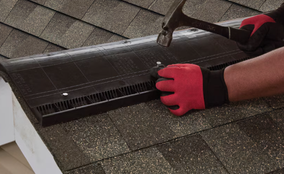
- Detailed Written EstimateClear, itemized pricing for ridge vent cleaning, refastening, resealing, or full replacement.
- Photo Proof & DocumentationHigh-resolution photos capturing the current condition of your ridge caps, vent mesh, fasteners, and airflow gaps.
- In-Person Expert ConsultationOur specialist reviews your roofline ventilation and recommends the best repair or replacement option for optimal airflow.
Protect your roofline. Prevent costly heat and moisture damage.
Book My Free Inspection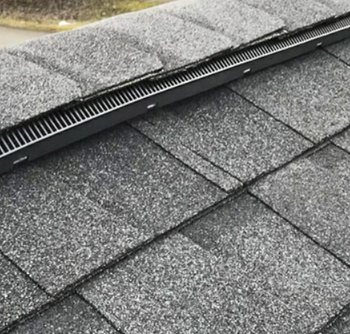
When Your Roof Doesn't Need a New Ridge Vent
Not every hot attic or musty smell means your ridge vent is bad. Sometimes the vent itself is fine. The problem is somewhere else on the roof.
If your ridge vent was installed in the last several years and there's no cracking, no gaps, no shingles lifting around it, it's probably still doing its job. Many newer homes already have a continuous ridge vent system that's holding up fine against summer heat. Popping the roof open just to look isn't worth it if there's no sign of trouble from the ground or attic.
Here's one we hear a lot: attic feels hot in July, homeowner assumes the ridge vent failed. It's blocked soffit vents choking off the airflow before it ever reaches the ridge. Replacing the ridge vent won't fix that. You'd be fixing the wrong end of the system.
- Attic moisture or mildew smell but the insulation looks dry and the roof is under ten years old, could be a bathroom fan venting into the attic instead of outside
- Ceiling stains near the peak but no daylight visible through the ridge, that's more likely flashing or a nail pop
- Roof looks fine from the street and the attic temperature matches what you'd expect for a hot summer day
If any of that sounds like your house, don't book a ridge vent job yet. A quick look, even one you do yourself with a flashlight in the attic, might be all you need.
Protecting Ridge Vents After Storms
Severe weather can be rough on your roof. Fast-moving thunderstorms with heavy wind gusts can lift shingles or damage the vent material. Homes under mature trees can also see branches and debris fall along the roofline during storms. That's a problem for a ridge vent, because it runs the entire peak of your roof. One snapped branch or a hard hail hit can crack the vent material or lift the shingles covering it.
We get calls after big storm systems roll through. Folks aren't calling about the whole roof, they're calling because they noticed something specific.
- Shingles near the ridge look lifted, curled, or missing after high wind
- You spot daylight or a gap along the ridge line from the attic
- Debris or pine needles are packed into the vent slot
- Water stains show up on the ceiling near the top of the house after rain
- Granules from the shingles collect in the gutters right below the ridge
Don't wait months to check. A ridge vent that got knocked loose during a storm won't fix itself. Every rain after that pushes more water where it doesn't belong. So if you had a bad storm come through and haven't looked, grab a flashlight and check your attic near the peak. If you see damp insulation or light coming through where it shouldn't, that's your sign.
Thinking about ridge vents?
Let's talk. We'll look at the ridge line, the soffits, and the attic, then tell you what it actually needs.
Book My Free Inspection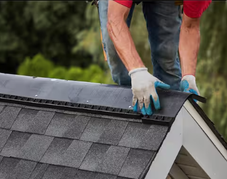
Inside a ridge vent installation, step by step
Most homeowners never see this part. You're inside, the crew's on the roof, and all you hear is hammering. Here's what's happening up there.
- We start by pulling the old ridge cap shingles off along the peak, exposing the decking underneath
- Our team cuts a slot along the ridge board, usually an inch or two wide on each side, so hot air has a path out
- We check the decking right there in the cut. Soft wood or dark staining tells us there's been moisture getting in for a while
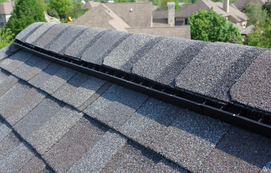
- The vent material goes down next, either a shingle-over ridge vent or a rolled ridge vent, depending on your roof's slope and shingle type
- We fasten it with corrosion-resistant nails spaced to hold through wind, not just tacked on
- New ridge cap shingles go over the top, cut and layered so the vent stays hidden and water can't sneak in sideways
- We do a final walk of the ridge line to check the seal and take photos for our documentation
That decking check in step three matters more than people think. Summer thunderstorms can leave hidden moisture damage behind. A roof that's been quietly trapping heat and moisture can have soft spots you'd never spot from the ground. We've opened up ridges expecting a clean job and found decking that needed replacing before the vent could even go on.
A straightforward ridge vent job on a typical home usually wraps up in a matter of hours, not days. No tear-off, no dumpster in the driveway. Just a clean cut, the right vent, and a ridge line that finally lets your attic breathe the way it's supposed to.
Common questions about ridge vents
How long does ridge vent installation take?
Do you cover ridge vent work throughout the area?
What should I expect when your crew inspects my ridge vent?
Why does summer heat make attic ventilation such a big deal?
How do I know if my ridge vent is the problem?
Does every roof need a ridge vent, or are there other options?

Metro Atlanta's trusted roofing team. Roof replacement, repair, storm damage restoration and inspections across Cobb County, North Fulton, Atlanta and DeKalb, done right the first time.
© 2026 Shelter Guard Roofing. All Rights Reserved.