
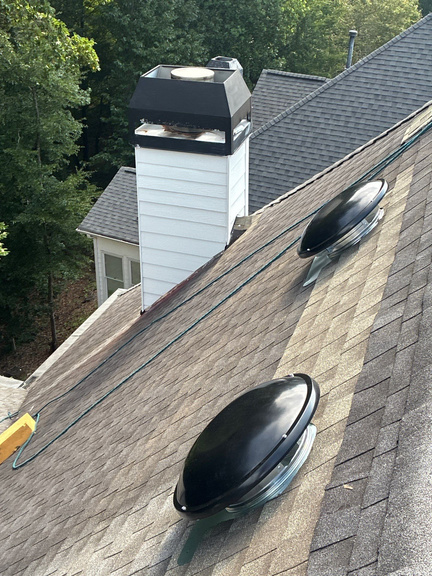
Powered attic fan: cool your attic before summer hits
Roofing done right the first time.
A fan only works if the intake is open. We check the soffits and ridge first, size the unit to your attic, and seal the roof cut like the roofers we are.
Signs your attic needs better ventilation
Before installing a powered attic fan, look for signs like hot upstairs rooms, rising summer electric bills, musty odors, and a fan that's broken or unusually loud. During hot summer weather, a poorly ventilated attic traps heat and strains your HVAC system. Recognizing these symptoms early helps you diagnose the problem.
Attic ventilation problems rarely announce themselves clearly. That is why so many homeowners live with the symptoms for years. The U.S. Department of Energy notes that an unventilated attic can reach temperatures 40 to 50 degrees hotter than the outside air. On a hot summer afternoon, that can push attic temperatures well past 130°F. That heat radiates down through insulation and ceiling drywall, making upstairs bedrooms and bonus rooms uncomfortable.
- Upstairs rooms feel hotter than the rest of the house, even with the air conditioner running
- Summer electric bills climb faster than expected, a sign your HVAC system is fighting excess heat load from above
- Musty, stale, or humid odors linger in the attic, signaling trapped moisture that ventilation should be removing
- An existing attic fan has stopped running, cycles on and off erratically, or produces loud grinding or rattling noises
- Visible condensation, rusted nails, or dark staining on roof sheathing point to moisture buildup from inadequate airflow
- Ice dam formation in winter, a less common but real sign during cold snaps, indicating heat escaping unevenly into the attic
These symptoms can overlap with other issues, like insufficient insulation, air leaks around recessed lighting, or an undersized HVAC system. A diagnosis distinguishes between a ventilation problem and something else. Homeowners who skip this step sometimes install a powered attic fan expecting relief, then find the underlying issue was inadequate soffit intake or insulation gaps that no fan can fix.
The most reliable way to confirm a ventilation issue is a direct inspection. We check attic temperature against outdoor conditions on a hot afternoon, look for adequate soffit and ridge venting, and inspect any existing fan for mechanical wear. This diagnostic step matters as much as the fan itself.
Powered fans vs. solar and passive ventilation
Folks ask us this all the time. Powered attic fan, solar attic fan, or just more soffit vents and a ridge vent, which one works? Here's the honest answer: it depends on your attic, your roof pitch, and how much power you want to run through it.
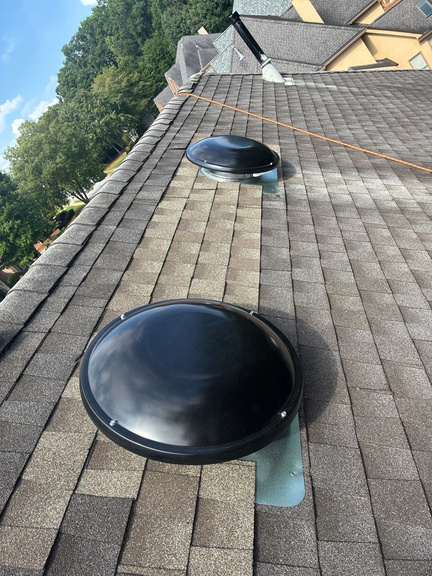
A powered attic fan uses a home's electrical system to pull hot air out fast, even on days with zero wind. That's the big advantage. Passive options like a ridge vent or box vent rely on natural air movement. There is no motor, no wiring, and nothing to fail. A solar attic fan splits the difference. It runs on its own panel so it doesn't touch your electric bill, but it slows down on cloudy days.
Powered attic fan
Strongest airflow, works day or night, needs an electrical connection.
Solar attic fan
No wiring into the home's power, output drops on overcast days.
Ridge vent and box vent
No moving parts, depend on soffit intake working properly.
Soffit vents
The intake side of the system, useless without enough exhaust up top.
We inspect the attic before recommending anything. If your soffit vents are blocked with insulation, adding a powered fan won't fix the problem. It'll just work harder pulling air from wherever it can find it, sometimes back through the ridge instead of the soffits. That's a common mistake we catch during inspections.
So which one's right for you? That depends on your attic's setup, not a one-size-fits-all answer.
Keep your attic cool and your roof protected
Powered attic fans actively pull heat and trapped moisture out of your attic to protect your entire roofing system. A non-working or inefficient fan can cause heat to bake your shingles from underneath, drive up cooling costs, and foster mold growth during humid months.
- Detailed written estimateClear, upfront pricing on power fan repair, upgrade, or replacement options.
- Photo proof & documentationPhotos detailing your attic fan's electrical and mechanical condition, intake vents, and surrounding roof structures.
- In-person expert consultationOur specialist reviews your attic's ventilation setup and recommends the best fan solution to reduce heat strain and lower energy bills.
Protect your attic. Prevent costly heat and moisture damage.
Book My Free Inspection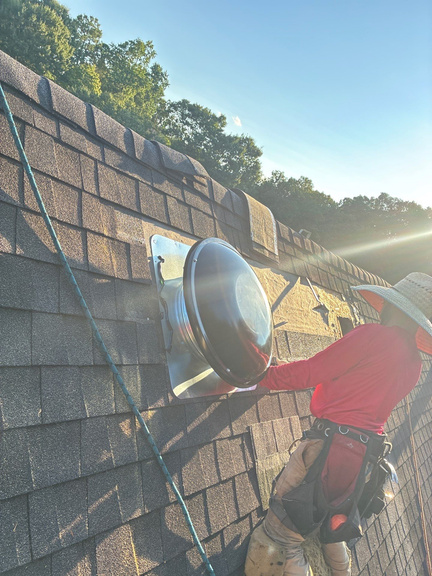
When a powered attic fan isn't the right fix
A powered attic fan needs enough intake air to do its job. If your soffit vents are blocked, painted shut, or stuffed with insulation, the fan just pulls cooled air out of your living space. We see this often in older homes where soffit bays were sealed up during past remodels. Adding a fan on top of that doesn't fix anything. It just runs your power bill up and leaves the attic hot.
There are cases where a fan isn't the answer. It's good to know them before you spend money.
- Your attic already moves air well through a ridge vent and box vent working together. Adding power won't change much.
- Moisture in the attic is coming from bathroom or kitchen exhaust fans dumping straight into the attic instead of outside. That's a duct problem, not a ventilation problem.
- The roof deck has soft spots or wood rot. A fan can't fix decking that's already failing.
- You're planning a roof replacement soon anyway. It's better to handle ventilation as part of that job.
Here's the honest part. If your intake vents are closed off, we'll tell you that during the inspection instead of just selling you a fan. Fixing soffit vents first, then deciding on a fan, solves the heat problem.
Have questions about attic ventilation?
We're happy to help. We'll check the intake, the exhaust, and the fan itself, then tell you what your attic actually needs.
Book My Free InspectionOr call (404) 620-5560
What happens during a ventilation inspection and install
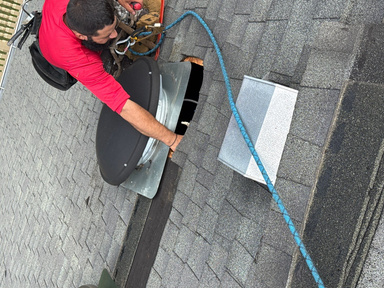
A powered attic fan installation starts long before a technician cuts into the roof deck. The first step is a walkthrough of the existing ventilation system to check whether intake and exhaust air are balanced. Many older homes have soffit vents that were painted over, blocked by insulation, or never sized correctly for the roof they serve. Installing a powered fan without fixing that imbalance can pull conditioned air from the living space instead of hot air from the attic, which drives up cooling costs rather than lowering them.
- Inspect soffit and ridge vents for blockage or damage before adding powered exhaust
- Measure attic square footage and calculate correct fan CFM sizing
- Verify or install a dedicated electrical circuit to code
- Cut the roof penetration cleanly, matching it to shingle or metal roofing type
- Flash and seal the opening using roofing-grade materials, not generic caulk
- Test the humidistat or thermostat control after power is connected
During this walkthrough, insulation depth and condition get checked. Compressed, water-damaged, or thin insulation changes how much heat load the attic carries, which affects what size fan is appropriate. A technician measures attic square footage and calculates the cubic feet per minute needed to exchange air. An undersized unit runs constantly without keeping up, and an oversized unit can create negative pressure problems.
Electrical work is the next stage. This is where a lot of quick installs go wrong. The crew confirms there is an available circuit that can safely handle the fan's draw, or runs new wiring if not. Because this is electrical work tied to a permanent fixture on the home, applicable local permitting requirements should be confirmed before installation. Skipping that step can create issues later with insurance claims or home resale inspections.
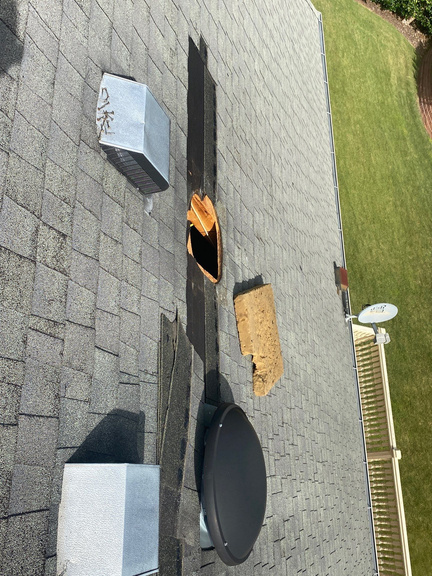
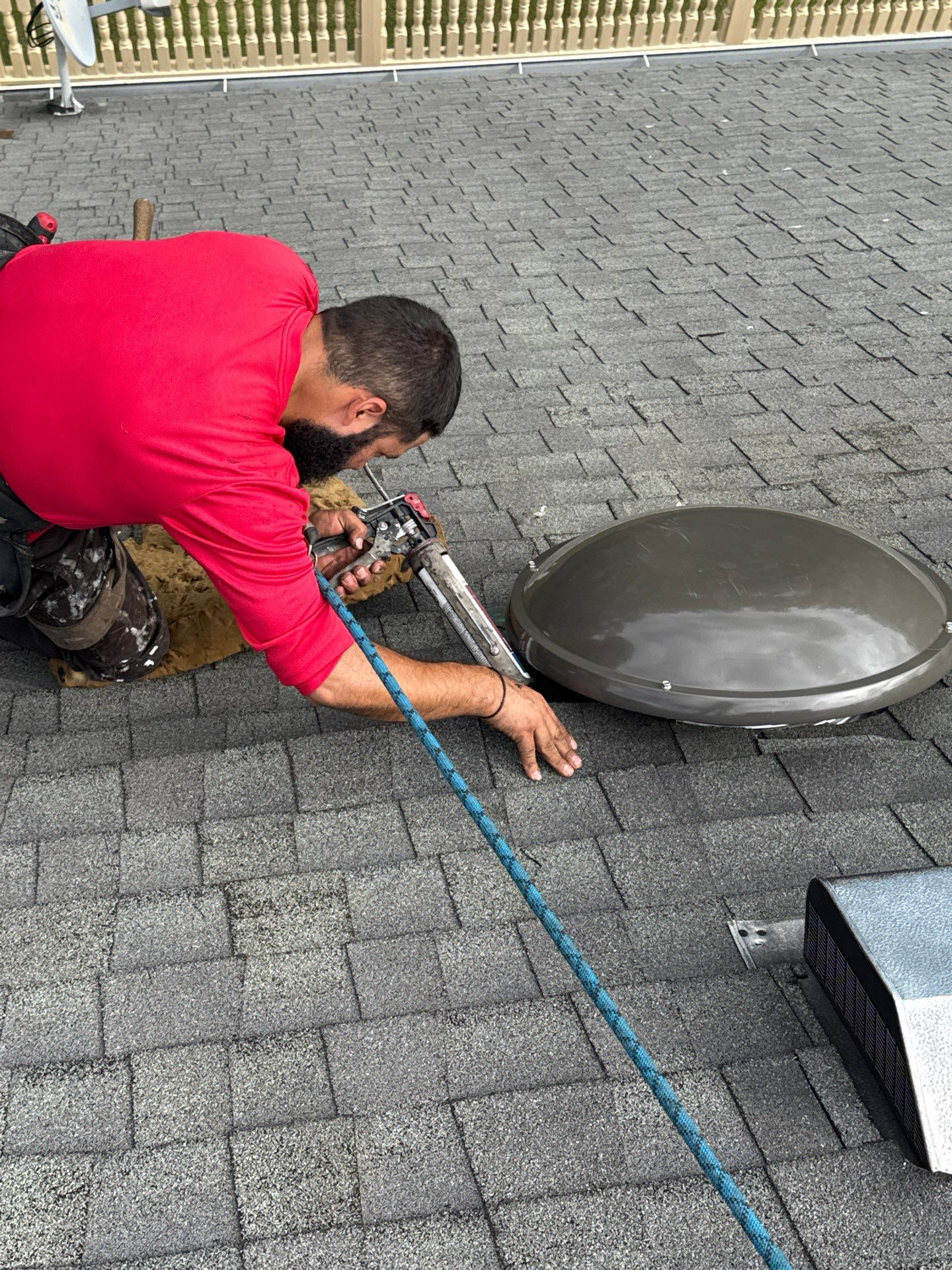
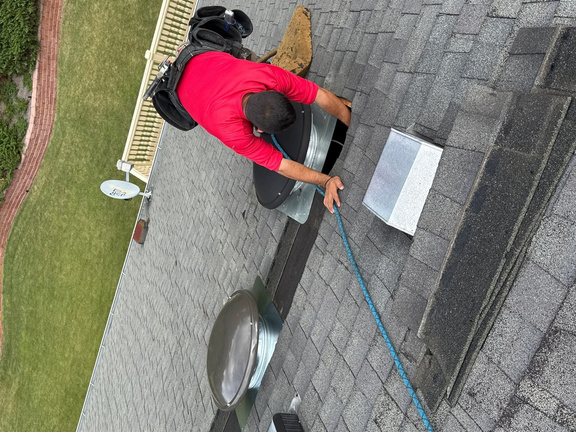
The final step is the roof penetration. This is flashed and sealed the same way a plumbing vent or skylight would be. A fan housing is only as good as the seal around it. This is the core reason fan installation belongs with a roofing company rather than a general contractor: the roof's waterproofing system has to stay intact after the cut is made.
Common questions about powered attic fans
How do I know if my attic needs a powered fan?
What happens during an attic ventilation inspection?
Why do older homes have more attic ventilation problems?
Should I get a powered attic fan or a solar attic fan?
Can a powered attic fan cause problems if my vents aren't set up right?

Metro Atlanta's trusted roofing team. Roof replacement, repair, storm damage restoration and inspections across Cobb County, North Fulton, Atlanta and DeKalb, done right the first time.
© 2026 Shelter Guard Roofing. All Rights Reserved.