The smallest part of your roof does a lot of work
Roofing done right the first time.
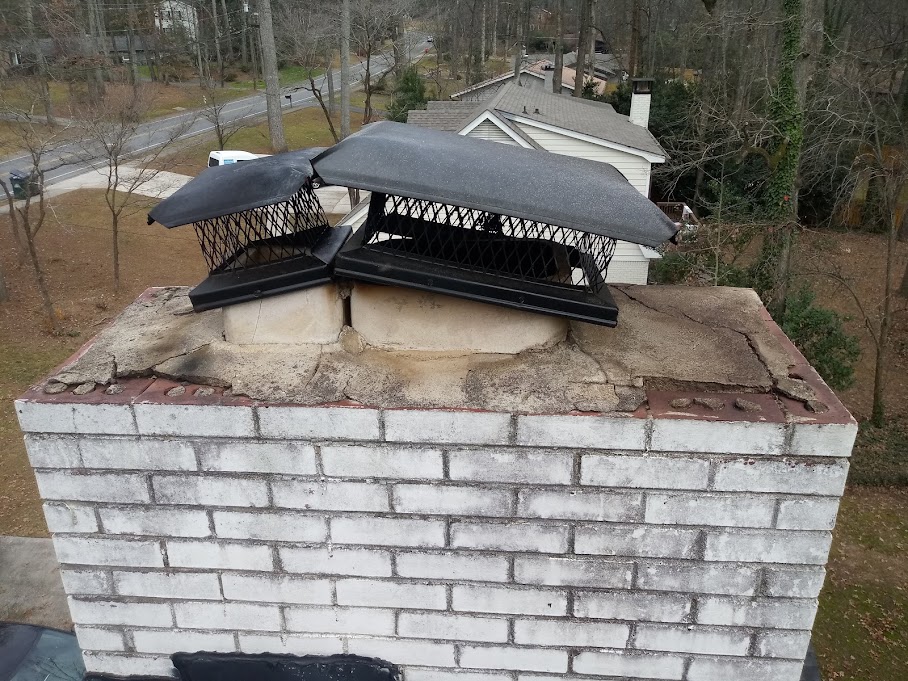
Rust streaks, a banging noise in the wind, or a stain near the fireplace. We get up there, look at the cap, the chase cover, and the crown together, and tell you which one is actually the problem.
Signs your chimney flue cap needs attention
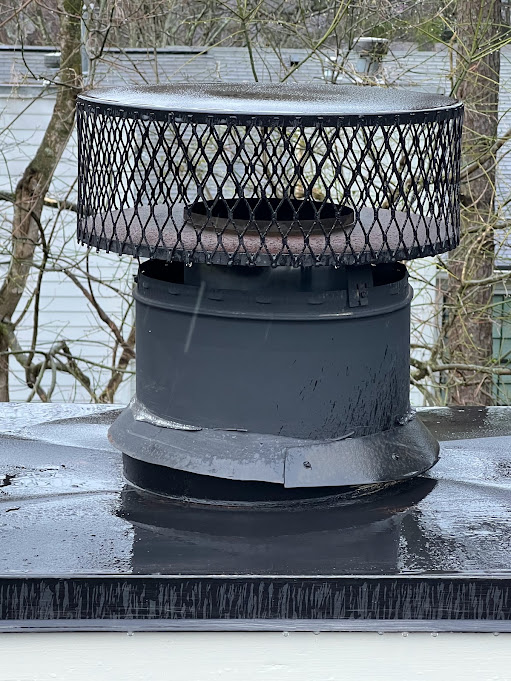
A failing flue cap usually shows up as rust streaks, a banging sound in the wind, or water stains near your fireplace. Heavy pollen, pine needles, and sudden summer storms can wear these caps down faster than folks expect. Catching the signs early keeps water and animals out of your chimney.
Most homeowners don't think about their flue cap until something goes wrong. We get it, it's a small piece of metal way up on the roof. It does a lot of work up there.
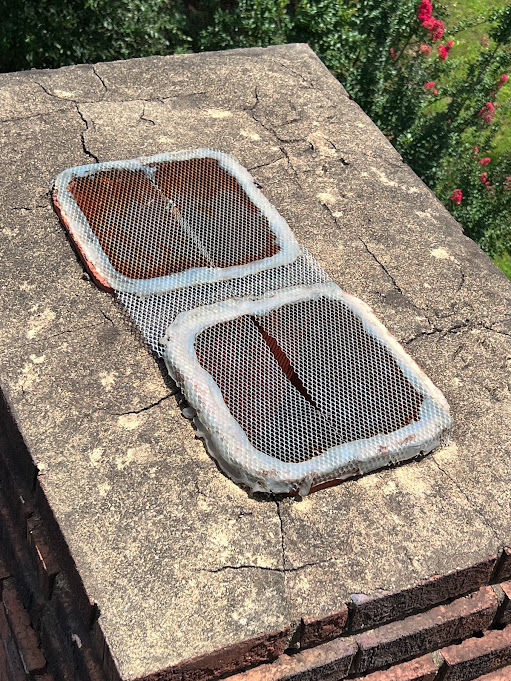
So what does trouble look like? Rust is the first thing we check for, especially on older galvanized caps. Humid summers and heavy rain speed up corrosion. A cap that's rusted through won't keep rain out of your flue anymore.
- Rust colored streaks running down the chimney chase or crown
- A metallic banging or rattling sound during windy weather
- Water spots on the ceiling near the fireplace after a storm
- Mesh screen clogged or torn, letting pine needles and debris fall into the flue
- Visible daylight or gaps where the cap meets the flue pipe
- Animal noises or nesting material, birds and squirrels love an open flue
Homes with tall pines nearby tend to clog mesh screens faster than homes without heavy tree cover. A banging sound means the cap has come loose from the crown and may need to be reset or replaced.
Flue caps vs. chimney chase covers and mortar caps
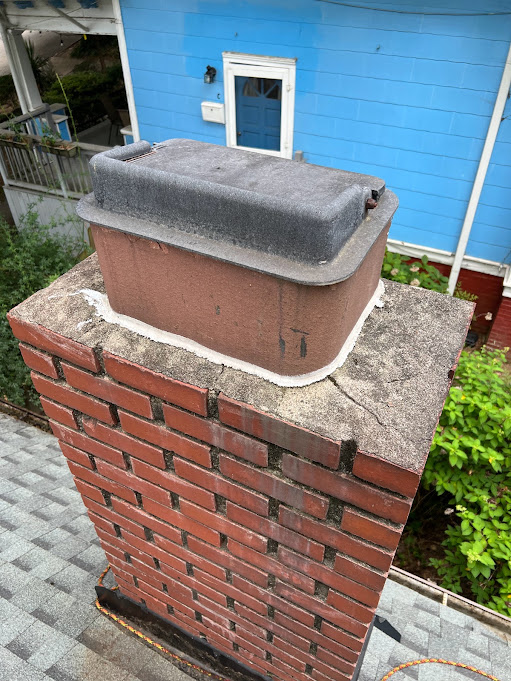
Homeowners often use flue cap, chimney chase cover, and mortar cap interchangeably. Each term describes a different job on a different part of the chimney. Mixing them up can lead to buying the wrong repair or paying for a part that was never broken. Understanding these three components is the first step to getting an accurate quote instead of a guess.
Flue cap
Covers a single flue outlet, the round or square pipe opening where smoke and gases exit. Most homes with one fireplace or furnace vent have just one flue cap to worry about.
Chimney chase cover
A metal pan that seals the entire top of a factory-built chimney chase, the boxy structure often seen on newer homes. It protects multiple flues and the framing beneath them at once.
Mortar cap, also called a crown
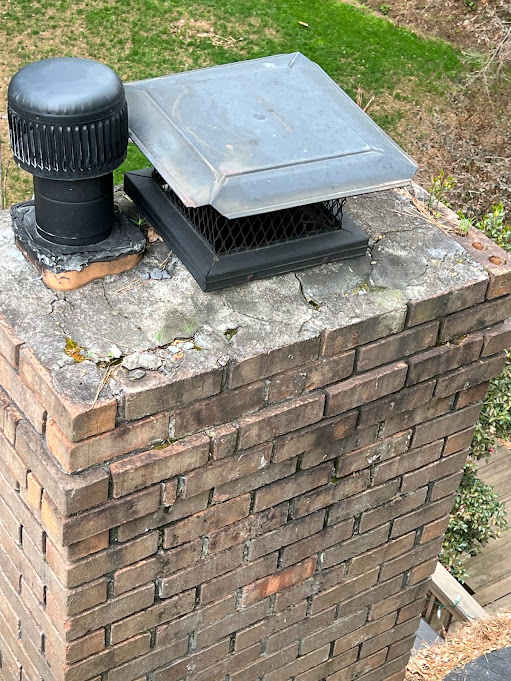
The concrete or mortar surface poured over a masonry chimney to shed water away from the brick. Cracked crowns are common on older homes with masonry chimneys built decades ago.
Mesh matters too. Where a spark arrestor is fitted to a masonry chimney, the residential code sets how it has to be built, covering screen opening sizes, wire gauge, and open area, so embers stay contained while the flue still drafts properly. Whether one is required on your chimney depends on the code your county has adopted and the appliance the flue serves. It's worth checking rather than assuming either way.
The practical challenge for homeowners is that these three components sit inches apart on the roofline. A technician who only checks one may walk right past active damage on another. A homeowner who calls out a specialist for a rusted flue cap might have a hairline crack in the mortar crown that is already letting water into the flue liner, or a chase cover with lifted seams feeding moisture into the attic below.
Protect your chimney system
A flue cap is your chimney's primary defense against rain, snow, debris, and animal intruders. A missing, rusted, or damaged flue cap allows moisture to pour straight down your flue liner, causing internal rust, masonry decay, liner cracking, and costly water damage inside your home.
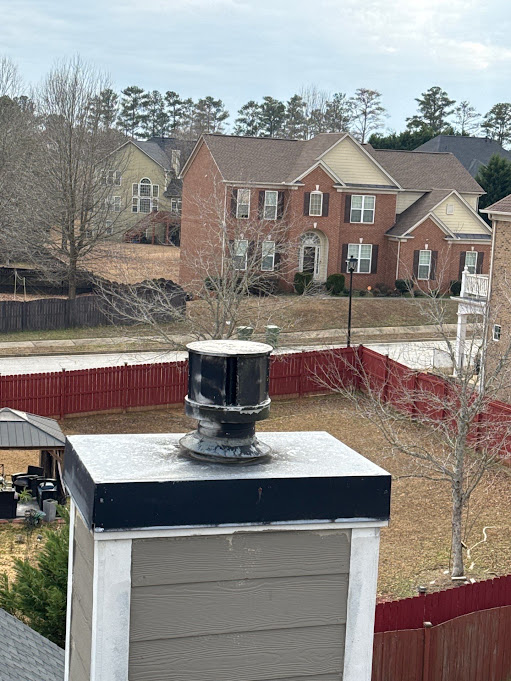
- Detailed written estimateClear, upfront pricing on flue cap repair, custom fitting, or replacement.
- Photo proof & documentationHigh-resolution photos showing the condition of your flue cap, mesh spark arrestor, and flue opening.
- In-person expert consultationOur specialist walks you through the findings and recommends the best durable cap solution to keep weather and pests out.
Protect your flue. Prevent costly internal water damage.
Book My Free Inspection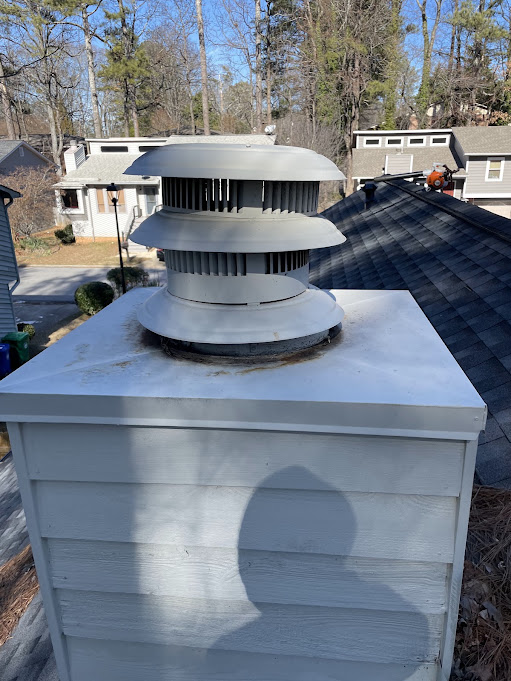
When a flue cap repair isn't necessary
Not every flue cap that looks weathered or discolored is failing. Many homeowners see rust streaks, soot staining, or a dull finish on their chimney cap and assume the worst, picturing an expensive replacement. In reality, a large number of these caps are still structurally sound. If the mesh screening is intact, the metal isn't warped or separating, and the seal against the chimney crown remains tight, the cap is likely doing its job. What you're seeing on the surface is often just cosmetic buildup from rain, pollen, and airborne debris common to humid climates.
Surface discoloration alone is rarely a reason to replace a cap. Rust bloom on galvanized steel, for example, can look alarming but may only affect the outer coating rather than the metal's integrity. Dark staining around the base often results from moisture interacting with mortar or flashing nearby, not the cap itself failing. In these cases, a simple cleaning and a routine inspection can restore both appearance and function without the cost of new materials or labor.
- The cap sits level and firmly attached with no visible gaps at the mounting points
- The mesh screen has no tears, rust-through holes, or missing sections that would let debris or animals inside
- Discoloration is limited to the surface and does not correspond with soft, flaking, or crumbling metal
- There is no evidence of water intrusion inside the flue, such as staining on the damper or firebox below
- The cap was installed within the last several years and has no history of storm damage or falling debris impact
The safest approach is never to guess based on a glance from the ground. What looks fine from the yard may hide a small crack or loose seam up close. A short, professional check gives homeowners a clear answer instead of a guess. It often reveals that cleaning or minor maintenance is all that's needed.

One visit, three checks
A bundled roof and chimney inspection examines the flue cap mesh, the chase cover seams, and the mortar crown condition in a single visit. Problems get caught together instead of one at a time over separate service calls.
Book My Free Inspection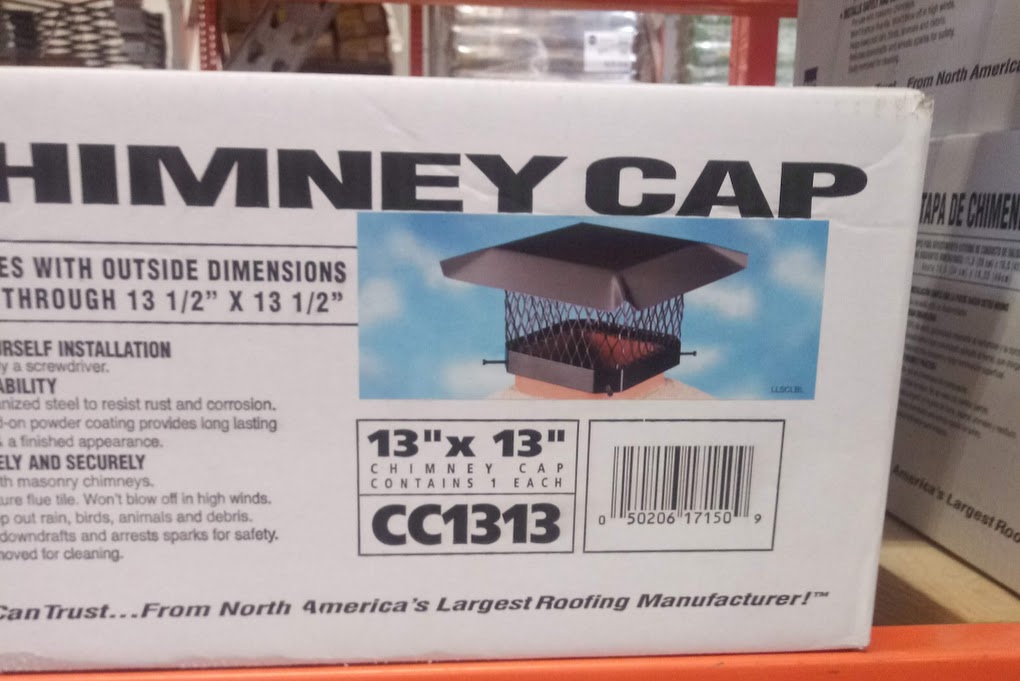
What happens during a flue cap inspection and replacement
So what does an actual flue cap visit look like? It starts on the ground. We look at the chimney from a distance first, checking for a cap that's leaning, rusted through, or just missing. Then we get up there.
- We check the cap material and mesh screen for rust, gaps, or storm damage.
- We test how it's fastened to the chimney chase. Loose caps are a common find on older homes.
- We clear out pine needles and debris that build up around the base, especially after storms.
- We inspect the flashing and mortar cap underneath, since a bad flue cap often points to a bigger flashing issue.
- We photograph everything for documentation, before and after.
- If replacement is needed, we install a new cap sized and sealed to fit your specific flue.
The whole thing usually takes less than an hour, unless we find something underneath that needs more attention. That happens more than you'd think. A cap that looks fine from the yard can hide a cracked mortar cap or gapped flashing once you're standing next to it.
We don't guess on this stuff, we document it. Every step gets recorded with photos. That way you're not just taking our word for it, you're seeing exactly what we saw. If it's a straightforward swap, we'll have the new cap on and sealed before we leave. If it's tied to bigger flashing or decking issues, we'll walk you through what we found and what your options are, no pressure, no vague answers.
Flue cap materials and what drives cost
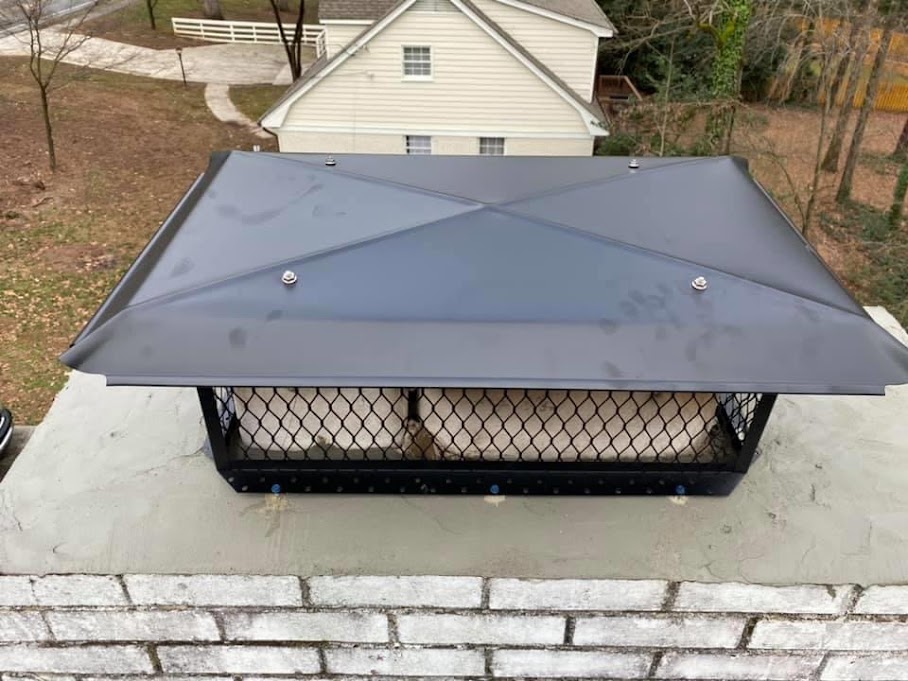
Flue caps are typically fabricated from one of three metals. The choice affects both upfront pricing and how the cap holds up against humidity, pollen season, and summer thunderstorms.
Galvanized steel
The most common budget-friendly option, offering solid rust resistance for several years before the coating can wear thin.
Stainless steel
Costs more but resists corrosion longer, making it a common upgrade for chimneys near sprinklers, gutters, or persistent moisture.
Copper
Sits at the top end, valued for its longevity and appearance. It develops a natural patina over time that many homeowners request to match existing roof or gutter accents.
What moves the number up or down:
- Number of flues needing caps, since multi-flue chimneys require either multiple caps or one larger multi-flue unit
- Stock size versus custom fabrication, as odd or oversized flue openings require on-site measuring and metal shop work
- Roof pitch and access difficulty, which affects staging, ladder work, and time on the roof
- Finish or coating upgrades, such as powder-coated colors to blend with roofing or trim
- Whether mortar crown repair is bundled into the same visit, since cracked or spalling crowns are often found during flue cap inspections
That last point matters more than homeowners expect. A technician who is already on the roof to fit a flue cap can usually spot crown deterioration, gaps in flashing, or loose chimney caps at the same time. Addressing those issues in one visit typically costs less than scheduling separate trips. It should be itemized clearly in the quote rather than folded into a single lump figure.
The most useful tool a homeowner has is a written, itemized quote. Ask the contractor to specify the metal type, whether the cap is stock or custom-built, what the roof access charge covers, and whether crown repair is included or billed separately. A transparent quote lists each of these line items individually, so there are no surprises once the work begins.
Common questions about flue caps
How fast can you get someone out to look at my flue cap?
What happens when your team arrives to inspect my chimney?
Why do flue caps wear out faster on homes near tall pine trees?
What's the difference between a flue cap, a chase cover, and a mortar cap?
My chimney cap looks rusty. Does that mean I need a new one?
Get a real answer, not a guess from the driveway
Free inspection of the cap, the chase cover, and the crown together, with photos and a written quote before any work starts.
Get My Free Inspection
Metro Atlanta's trusted roofing team. Roof replacement, repair, storm damage restoration and inspections across Cobb County, North Fulton, Atlanta and DeKalb, done right the first time.
© 2026 Shelter Guard Roofing. All Rights Reserved.