
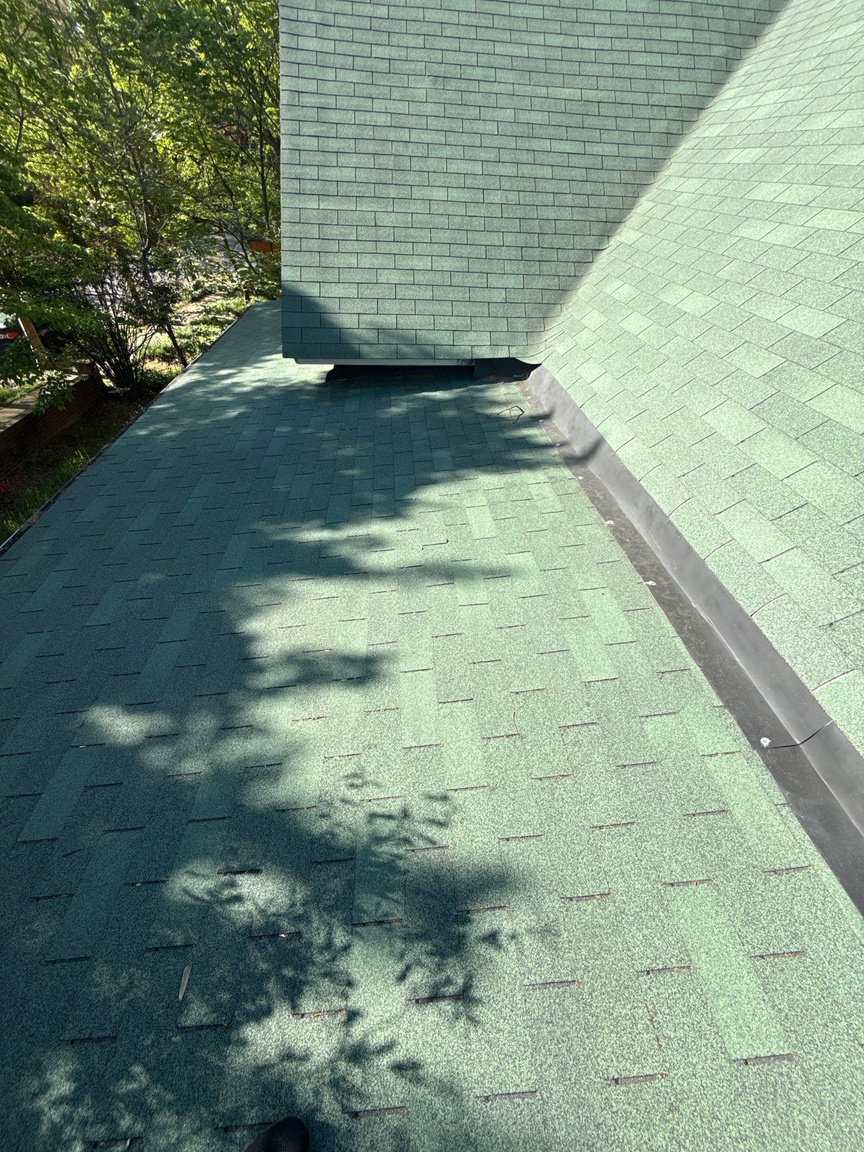
Flat roof repair and replacement: fix leaks before they spread
Roofing done right the first time.
Standing water, blisters, and split seams don't fix themselves. We walk the roof, check the decking, and tell you whether it's a patch, a coating, or a replacement.
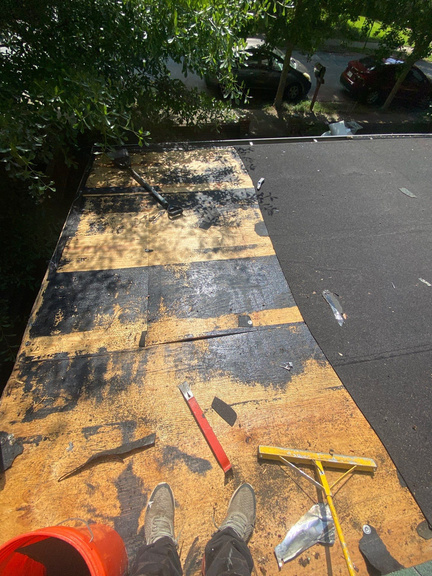
Signs your flat roof needs a closer look
Standing water, bubbling membrane, and cracked seams are the top warning signs on a flat roof. Heavy tree cover and summer storms can make drain clogs and ponding especially common, so catching these signs early matters.
Not every flat roof problem screams for attention. Some show up quiet, like a puddle that never quite dries out after a Tuesday storm.
- Standing water that's still there 48 hours after rain stops
- Bubbling or blistering on the membrane surface
- Cracked or separating seams, especially near edges
- Soft or spongy spots when you walk the roof
- Granules piling up in gutters or drains
- Ceiling stains or a musty smell inside the house
Pine trees drop needles year round, and they clog flat roof drains fast. We've pulled matted pine straw out of drains that had water backed up two inches deep. Add a summer storm, and a small clog turns into real ponding within a day. The membrane looked fine from the street. The trouble was hiding under a layer of pine straw.
Wondering if that little puddle by your AC unit is a big deal? It depends on how long it sits there and if it's happened before. One storm, probably fine. Every storm, that's a pattern worth checking.
We've walked flat roofs where the pooling was invisible from the ground. You'd never know until you got up there and saw the water sitting right where two seams meet.
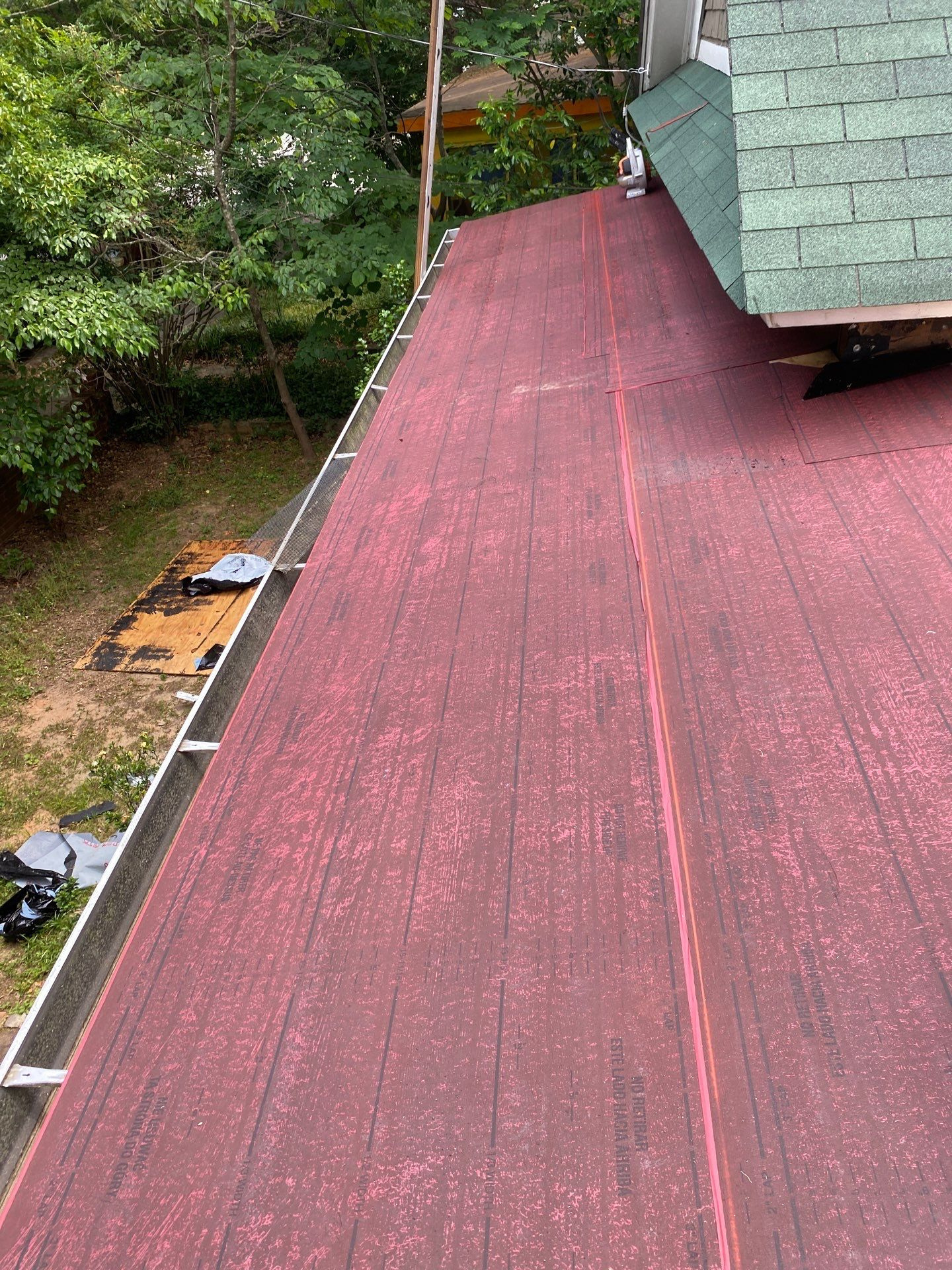
Repair versus replacement: how the decision gets made
Here's the question every flat roof owner asks us. Can this be patched, or do we need a whole new roof? There's no single answer. It depends on the membrane's age, how much of it is affected, and what's happening underneath at the decking level.
We look at a few things before we ever say the word replacement.
- How old is the membrane, and is it still within its expected service life
- Is the damage isolated to one seam or spread across multiple sections
- Is water reaching the decking, or is this surface-level wear
- Has this roof been patched more than once or twice already
- Is ponding water a recurring problem or a one-time event after heavy rain
One patch usually means repair. Three patches on the same roof in two years, that's a different conversation. At that point we're not fixing a problem, we're chasing one.
Decking condition matters more than most homeowners realize. If the membrane failed years ago and moisture worked its way into the wood underneath, a surface patch won't hold. We check for soft spots and rot before recommending anything. We document what we find with photos so you're not just taking our word for it.
That's the whole point of a free inspection and a written quote. You see exactly what we saw, and the recommendation makes sense because the evidence is right there in front of you.
Keep your flat roof watertight
Flat roofs require specialized care to handle standing water, severe UV exposure, and structural movement. Damaged seams, cracked membranes, or clogged drains can quickly allow ponding water to penetrate beneath the surface, causing hidden deck rot, insulation damage, and severe interior leaks.
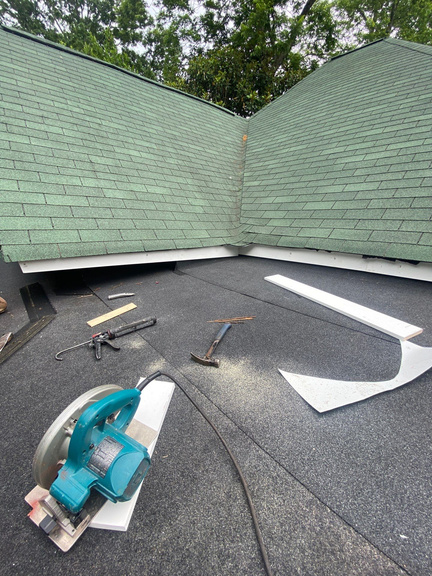
- Detailed written estimateClear, itemized pricing covering membrane repairs, seam resealing, drainage fixes, or coating options.
- Photo proof & documentationHigh-resolution photos capturing seam health, ponding water areas, membrane blisters, and drainage performance.
- In-person expert consultationOur specialist reviews the condition of your roof system and recommends the most durable, leak-proof repair or maintenance solution.
Protect your flat roof. Prevent costly interior water damage.
Book My Free Inspection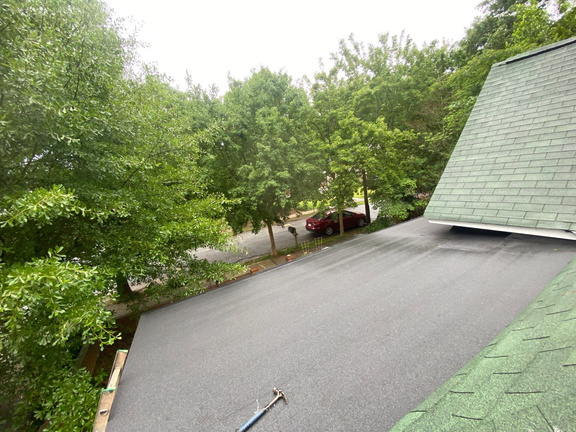
When a flat roof doesn't need full replacement
Not every flat roof problem means tear-off. Sometimes it's just one bad spot.
We check a lot of flat roofs where pine needles pile up on low-slope sections and clog the drains after a summer storm. Water pools for a day or two. Homeowners panic, call us thinking the whole roof is failing. It's not. The membrane underneath is still sound. The ponding is a drainage issue, not a roof-failure issue. Clear the debris, and the problem is gone.
- One or two isolated punctures or blisters, not scattered across the whole surface
- A single pipe boot or flashing point has failed but the field membrane around it is still tight
- Ponding is coming from clogged drains or scuppers, not a sagging deck underneath
- The membrane is still within its expected service life and hasn't gone brittle or lost its seal at the seams
If your situation matches those, repair makes sense. Full replacement doesn't. We'll tell you that straight, even if it means a smaller job.
Where it gets trickier is when the roof is old and one leak is really a symptom, not the problem itself. A cracked pipe boot on a membrane that's already brittle at every seam isn't a repair situation anymore, it's a replacement conversation. That's the honest line. The only way to know which side of it you're on is to get eyes on the roof, not guess from the ground.
Not sure what your flat roof needs?
Ask us. We'll get on the roof, check the seams and the decking, and give you a written answer.
Book My Free InspectionOr call (404) 620-5560
Flat roofs on additions and commercial buildings
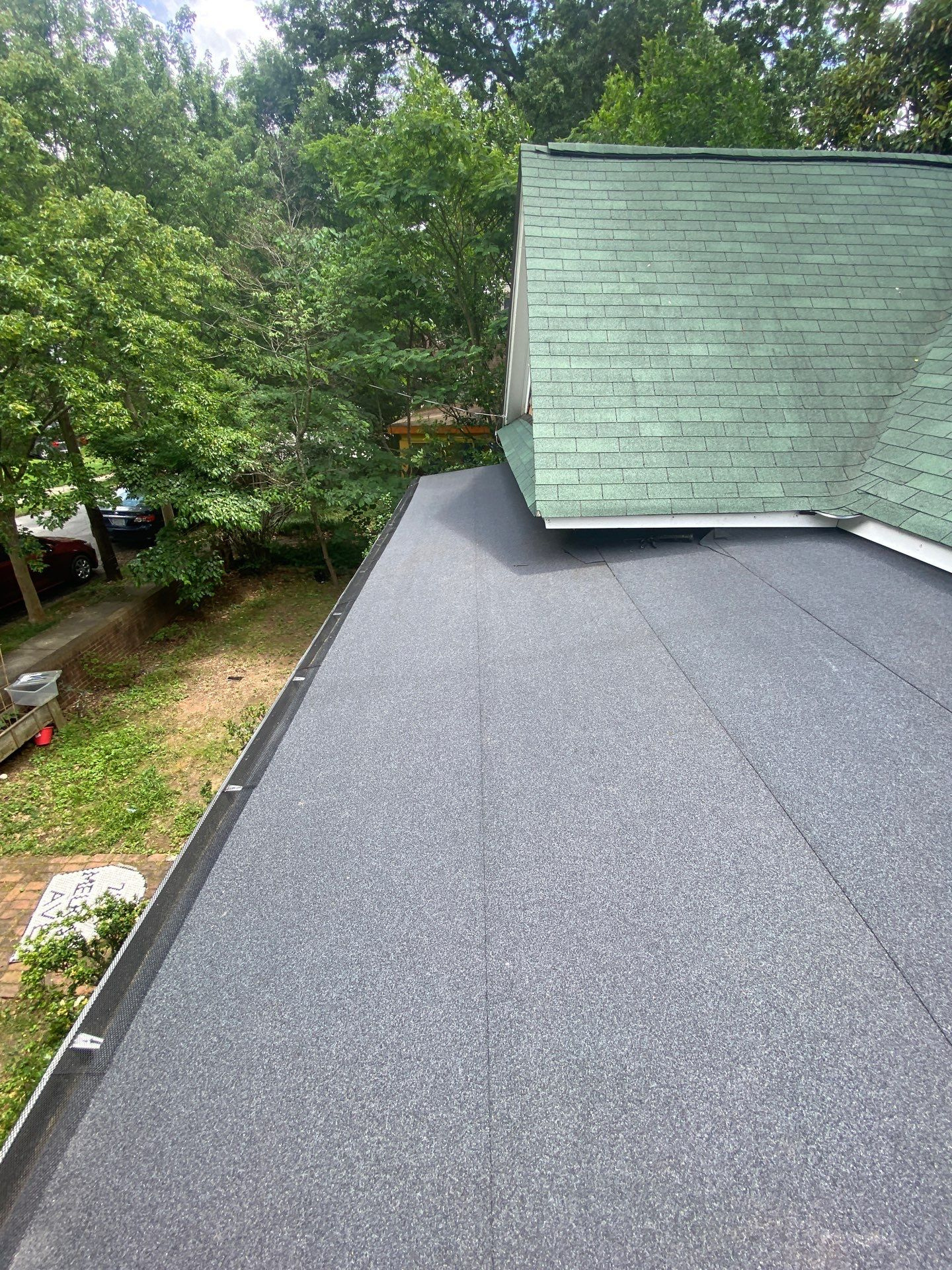
Most flat roofs aren't the whole roof. They're the back porch someone closed in during the 1980s, the kitchen bump-out, the sunroom addition. We see this constantly on older ranch homes, where a low-slope addition got tacked onto a steep shingle roof and nobody thought about the point where they meet.
That is where the trouble starts. Two different roof systems meeting at one seam. If that seam isn't flashed right, water finds it, every time.
Commercial buildings are a different animal, but the same logic applies. Storefronts and small office buildings often carry TPO membrane roofs that handle foot traffic from HVAC units and rooftop equipment. Hot summer conditions push membrane temperatures well past what asphalt shingles ever see. The material has to hold up under constant expansion and contraction.
- Sunroom or addition roofs where the flat section meets the main roofline
- Commercial flat roofs with rooftop HVAC or vent penetrations
- TPO membrane roofs on retail or office buildings needing repair or a roof coating
- Garage or carport flat roofs added years after the original build
Not sure which category your building falls into? That's fine. Most owners don't know until someone gets up there and looks. Whether it's a home addition or a commercial building, the goal is the same: catch the small stuff before it becomes a bigger job.
What happens during a flat roof repair or replacement
Every flat roof job starts with a walk on the roof, not a guess from the ground. Our team checks the membrane, the seams, and every pipe boot and flashing point before we say a single word about repair or replacement. Hot summer conditions push a lot of heat into a flat roof. Pine needles from mature trees pile up in low spots and hold water. That combination ages a membrane faster than most homeowners expect.
- We inspect the full roof surface, seams, flashing, and pipe boots, and document what we find with photos.
- We clear debris and standing water so we can see the actual condition of the membrane underneath.
- For repairs, we cut out the damaged section and patch or reseal it, matching the existing membrane type like TPO where possible.
- For replacement, we remove the old membrane down to the decking and check the decking itself for soft spots or rot.
- We install new membrane, flashing, and pipe boots as needed, sealing every edge and penetration point.
- We walk the roof one more time before we leave, checking every seam by hand.
When the decking underneath is fine, we're just replacing the surface. But if water's been sitting there a while, the decking has to come up too. That changes the scope of the job. That decking check matters more than people think.
Roof coatings can extend the life of a membrane that's still in decent shape. We'll tell you straight if that's an option instead of a full tear-off. We're not going to sell you a replacement you don't need yet.
Common questions about flat roof repair and replacement
Do you work on flat roofs, including additions and commercial buildings?
What happens when you come out to look at my flat roof?
Why does my flat roof keep pooling water after it rains?
How do you decide if my flat roof needs a repair or a full replacement?
What are the warning signs that my flat roof needs attention soon?

Metro Atlanta's trusted roofing team. Roof replacement, repair, storm damage restoration and inspections across Cobb County, North Fulton, Atlanta and DeKalb, done right the first time.
© 2026 Shelter Guard Roofing. All Rights Reserved.