
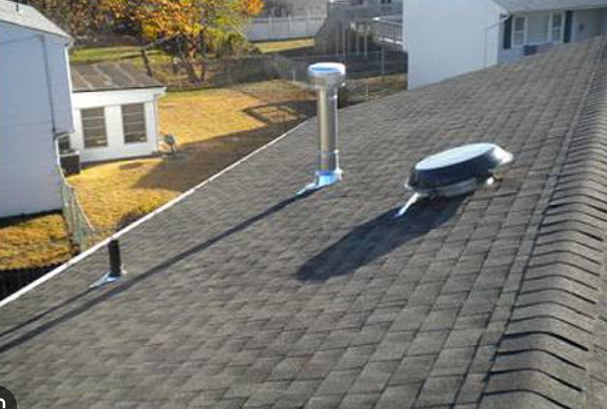
Fix the leak at the source
Roofing done right the first time.
Water tracking in around your furnace or water-heater vent doesn't stop on its own. We find where it's actually coming from before anyone quotes you a repair.
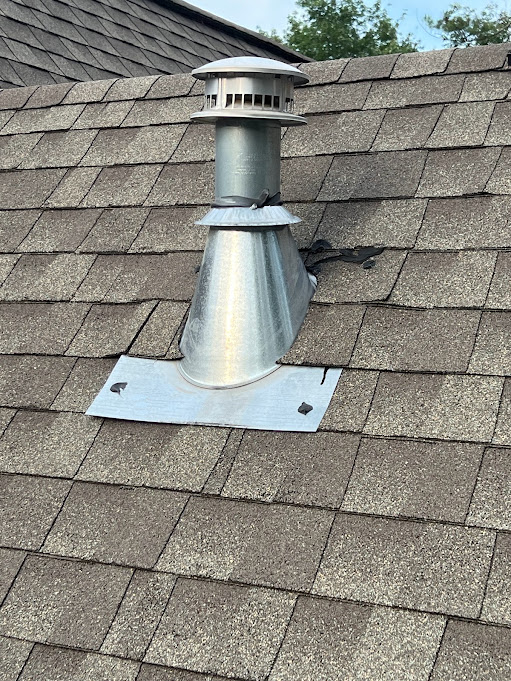
Signs your B-vent flashing is failing
Failing B-vent flashing can show up as rust streaks, loose metal, cracked sealant, or a water stain near where a furnace or water-heater vent passes through the roof. Left alone, water can track into the attic and damage insulation, decking, or drywall. Catching the problem early can keep a small flashing repair from becoming a much larger water-damage issue.
B-vent flashing is a small part of the roof, but it has an important job: keeping water out around a vent penetration. Look for:
- Rust-colored streaks around the vent or nearby shingles
- A flashing collar that looks loose or moves when inspected
- Ceiling stains directly below the vent penetration
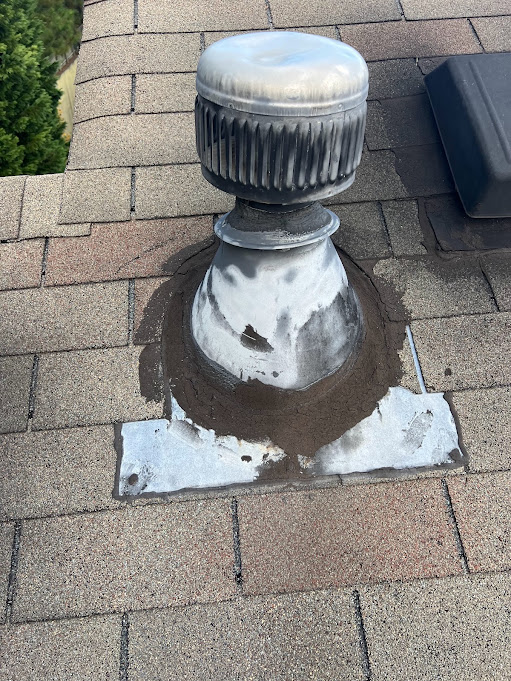
- Cracked, shrunken, or deteriorated sealant around the flashing
- Missing or damaged shingles around the vent
- Dripping sounds in the attic after heavy rain
Not every stain around a vent means the flashing is failing. Condensation inside the vent, damaged shingles, or another nearby roof penetration can create similar symptoms. A professional inspection can identify the actual source before you spend money on the wrong repair.
B-vent flashing vs. pipe boot flashing: know the difference
B-vent flashing and plumbing pipe boots can look similar from the ground, but they serve different purposes and fail differently.
A B-vent penetration is associated with a gas furnace or water heater and uses metal components designed around the vent pipe. A plumbing pipe boot typically uses a rubber or synthetic collar around a smaller plumbing vent.
- B-vent flashing: used around furnace or water-heater vent penetrations
- Pipe boot: used around plumbing vent pipes
- B-vent problems: often involve flashing, storm collars, corrosion, or improper sealing
- Pipe boot problems: commonly involve cracked or deteriorated rubber collars
The location of the stain can provide an important clue, but you don't have to diagnose the problem yourself. During an inspection, we identify the penetration and determine whether the issue is coming from the flashing, surrounding roofing, or another source.
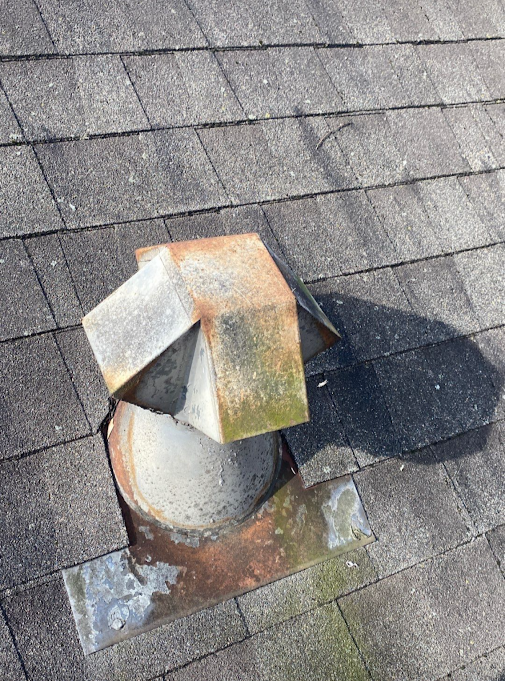
Keep your roof penetration sealed tight
B-vent flashing creates a watertight seal where furnace and water heater exhaust pipes penetrate your roof. Over time, extreme heat, UV exposure, and weather cause rubber collars to crack and metal flashing to pull away, letting water leak straight down into your attic and walls.
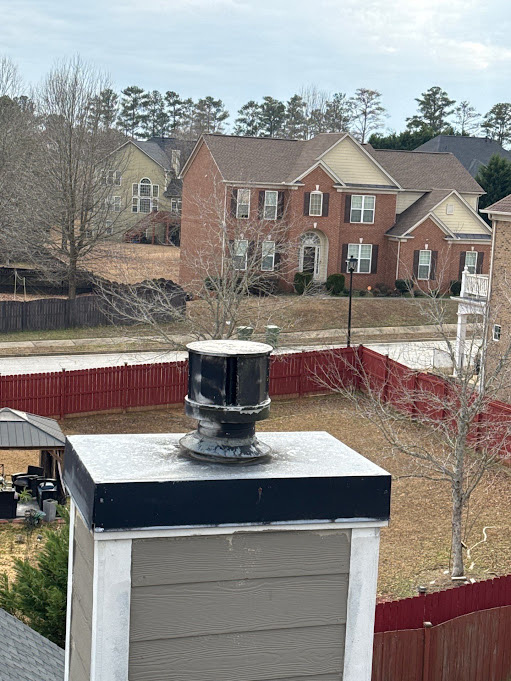
- Detailed written estimateClear, itemized pricing covering vent flashing repair, collar replacement, or resealing.
- Photo proof & documentationHigh-resolution photos showing cracked storm collars, rusted flashing bases, or sealant gaps around your exhaust vent.
- In-person expert consultationOur specialist reviews the condition of your exhaust flashing and recommends the most reliable, heat-resistant repair solution.
Protect your vent seals. Prevent costly interior water damage.
Book My Free Inspection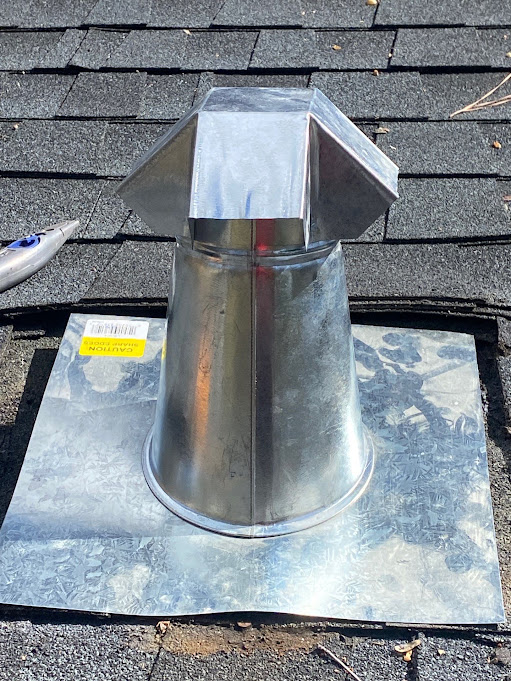
When it's not a roof leak at all
Not every wet spot around a B-vent penetration comes from rain. Condensation inside a vent can sometimes create moisture that looks very similar to a flashing leak. This can happen when the venting system has an installation, sizing, insulation, or other performance issue.
That's why replacing the flashing without identifying the source can sometimes fail to solve the problem. Possible clues include:
- Moisture appears when the furnace or water heater operates rather than after rainfall
- Staining stays concentrated around the vent pipe
- The exterior flashing appears intact
- There are no obvious gaps, cracked sealant, or damaged shingles
- Moisture or corrosion is visible around the vent itself
Roof flashing problems and appliance-venting problems require different solutions. If the inspection points to the venting system rather than the roof, we'll explain what we find instead of recommending a roof repair that won't solve the underlying problem.
What happens during a B-vent flashing inspection and repair
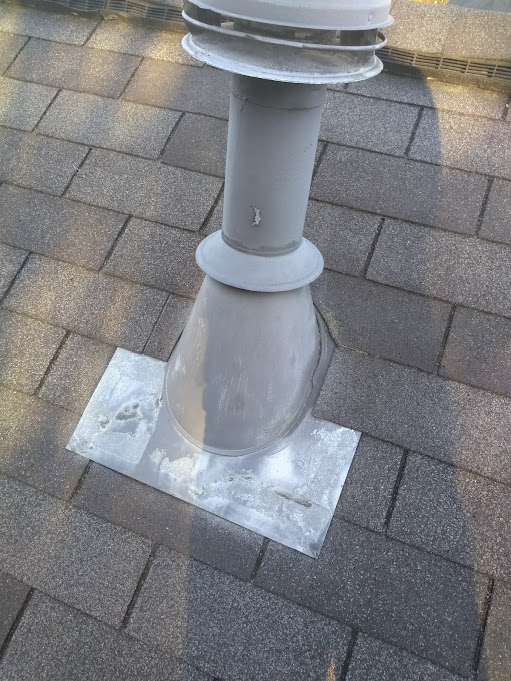
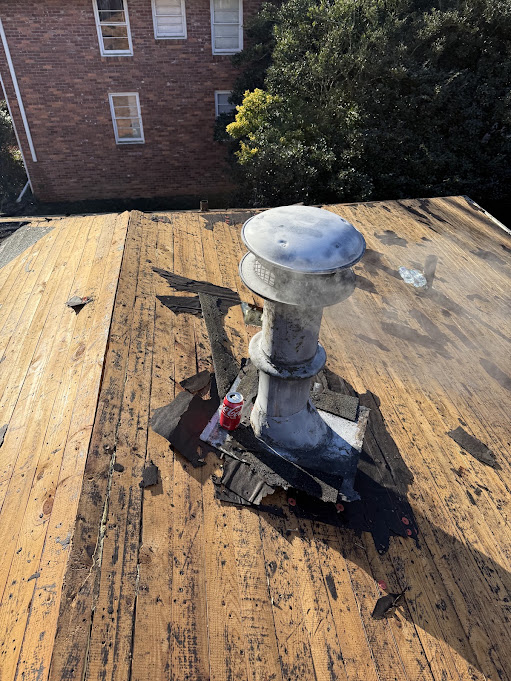
A B-vent flashing inspection starts at the roof penetration. We examine the flashing, storm collar, surrounding shingles, sealant, and the area where the vent passes through the roof. From there, we determine whether the problem requires a simple repair or replacement.
- Inspect the flashing and surrounding shingles
- Check the storm collar and sealant for deterioration
- Look for corrosion, gaps, or water entry points
- Inspect the attic area below the penetration for moisture or staining
- Determine whether the flashing can be repaired or needs replacement
- Replace damaged materials when necessary
- Properly integrate the flashing with the surrounding roofing
- Document the condition with before-and-after photos
If the flashing is still structurally sound and the problem is limited to deteriorated sealant, a smaller repair may be enough. If the metal is corroded, damaged, or no longer properly integrated with the roof, replacement is usually the better long-term solution. Because B-vents are associated with fuel-burning appliances, any concerns about the venting system itself should be evaluated appropriately rather than treated as a simple roof leak.
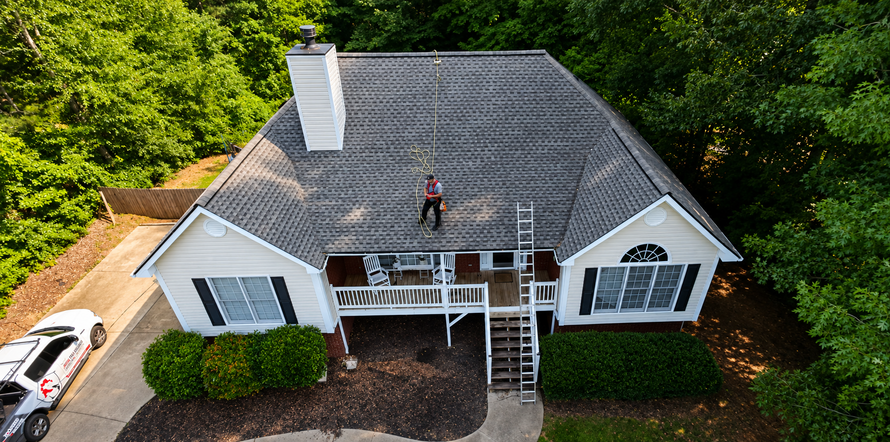
How B-vent flashing repair pricing works
There isn't one flat price for B-vent flashing repair because the amount of work depends on what we find around the penetration. A simple resealing job requires very different labor and materials than removing damaged shingles, replacing a deteriorated flashing assembly, and repairing water-damaged decking.
Several factors can affect the cost:
Older roofs can also require additional care when matching existing shingles or integrating new materials into the surrounding roof system. A written, itemized estimate makes it easier to understand exactly what you're paying for and whether additional repairs are actually necessary.
We inspect first, explain what we find, and provide a written scope before work begins.
B-vent flashing, answered
How do I know if my ceiling stain is from B-vent flashing or condensation?
What happens during a B-vent flashing inspection?
Can B-vent flashing be repaired instead of replaced?
Can a B-vent flashing problem damage my attic?
Why shouldn't I just add more caulk around the flashing?
How long does a B-vent flashing repair take?
Ready to fix your B-vent flashing?
Don't wait for a small flashing problem to become attic or ceiling damage. Get your free estimate from Shelter Guard Roofing and Gutters.
Get My Free Estimate
Metro Atlanta's trusted roofing team. Roof replacement, repair, storm damage restoration and inspections across Cobb County, North Fulton, Atlanta and DeKalb, done right the first time.
© 2026 Shelter Guard Roofing. All Rights Reserved.