
Gutter guards are sold as a maintenance-free solution. You install them, and just like that, no more climbing ladders or cleaning out clogged gutters. Sounds great, right? But if you live in Atlanta or anywhere in the metro area, there’s one stubborn reason why that promise doesn’t hold up: pine needles.
More specifically, those sleek, sloped “waterfall” gutter guards (sometimes called reverse-curve or surface tension guards) simply don’t do well in neighborhoods filled with loblolly, shortleaf, and slash pines. If your yard looks like a pine needle party every fall and spring, keep reading. We’re about to break down why these types of gutter guards often fail in Atlanta.
What Are Waterfall Gutter Guards?
Waterfall gutter guards are designed around a simple principle: surface tension. Rainwater flows over a curved or sloped cover and tucks into a narrow slot at the front edge of the guard. The idea is that leaves, twigs, and other debris fall off the edge while water flows smoothly into your gutter.
On paper, it’s a clever design. In real life—especially under Georgia pines—it’s a different story.
Why Waterfall Gutter Guards Fail in Pine-Rich Areas
If you’re dealing with even one mature pine tree near your house, you’ve likely noticed this already: pine needles don’t fall all at once. They shed throughout the year, and they don’t just drop straight down—they float, slide, and wedge into small places.
Here’s how that affects waterfall-style guards:
1. Needles Bridge the Gap
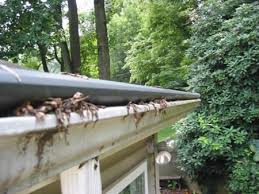
The small front slit where water is supposed to enter the gutter gets covered by needles laying flat across it. When that happens, rainwater can’t get in—it just runs over the edge.
2. Guards Get Clogged on Top
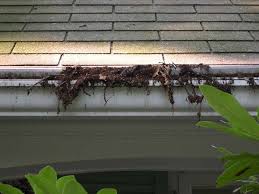
Needles accumulate along the top slope of the guard. Over time, this turns into a thick layer of debris that needs to be cleaned off—which defeats the whole purpose of installing guards in the first place.
3. Needles Slip Inside
Some waterfall designs have larger entry holes or slits under the curve. Unfortunately, pine needles are thin enough to sneak in. Once inside, they pile up in the gutter itself, causing clogs just like they would without a guard.
4. Overflow and Water Damage
When the system is blocked—whether by a needle mat or internal clog—water overshoots the gutter entirely. That can lead to soil erosion, foundation damage, or rot along the fascia and soffits.
So instead of low maintenance, you end up with another type of upkeep: brushing off the guards, checking for clogs, and still possibly calling a gutter cleaning service every year (or more).
Final Thoughts: Know Your Trees, Know Your Tools
Waterfall-style gutter guards might work just fine in areas with mostly hardwood trees or moderate debris. But in Atlanta, where pine trees reign supreme, they often do more harm than good. The narrow openings and smooth surfaces simply can’t keep out the constant stream of pine needles.
If you’re planning to invest in gutter protection, match your guard system to your environment. And if you already have waterfall guards installed and are struggling with clogging, it may be time to consider a switch.
Because at the end of the day, gutter guards are supposed to make your life easier—not give you one more thing to clean.
Contact us to help you during this process!